Understanding the Historic Restoration Challenge
Your historic home in Charleston or Mount Pleasant isn’t just a house. It’s a piece of local heritage with architectural details, structural systems, and character that took decades or even centuries to develop. Yet many homeowners face the same dilemma: how do you restore and modernize a historic property without destroying what makes it special?
The difference between hiring a generic remodeling contractor and a preservation-focused expert is substantial. It affects everything from permit approvals to material sourcing, from timeline accuracy to final results that actually respect your home’s history.
Historic homes present unique challenges that standard remodeling crews aren’t equipped to handle. These properties often have plaster walls instead of drywall, hand-forged hardware, original floor joists sized differently than modern lumber, and structural systems designed before contemporary building codes existed.
When you undertake a historic home restoration, you’re navigating multiple stakeholder expectations simultaneously. The historic district review board has specific requirements. Local code officials need assurance that modern safety standards are met. Your own vision for updated functionality has to coexist with authentic preservation. And underneath it all, the house itself has quirks and issues that reveal themselves only when you start opening walls.
Generic remodeling contractors approach these challenges like any other job. They view historic elements as obstacles to work around rather than assets to preserve. A dropped ceiling hides original crown molding. Non-historic windows replace divided-light originals. Modern materials substitute for authentic ones because they’re faster and cheaper.
The real cost emerges later: loss of property value where historic authenticity matters, denial of historic tax credits you qualified for, complications when you sell to buyers who value genuine preservation, and the intangible loss of your home’s character and story.
Generic Remodeling Approaches vs. Specialty Historic Expertise
Here’s the fundamental difference: generic remodeling focuses on efficiency and standardization. Specialty historic restoration focuses on informed preservation within modern living standards.
A standard contractor works from a playbook. Gut the space, install modern systems, finish with contemporary materials, move to the next job. This approach minimizes surprises and keeps costs predictable in the short term. But it strips away what distinguishes your home and often violates historic preservation guidelines that affect property value and future resale.
We approach historic restoration as a forensic and creative process. Before we make any structural decisions, we investigate what’s original, what was changed over time, and what’s worth preserving. We work with preservation consultants when needed. We source or recreate materials that match originals in appearance and performance. We design solutions that hide modern infrastructure (electrical, HVAC, plumbing) rather than letting it dominate spaces.
Our design-build remodeling process integrates this philosophy from the first concept meeting through final inspection. Design and construction teams collaborate from day one, which means preservation priorities get built into the plan rather than bolted on afterward.
When you hire a preservation-focused contractor, you’re investing in expertise that protects your home’s integrity while making it livable for modern families. That’s a different value proposition entirely.
Preservation Standards and Code Compliance Comparison
One of the most misunderstood aspects of historic restoration is the relationship between preservation standards and building code compliance. Many homeowners assume these two requirements are in conflict. In reality, they can coexist when you know how to navigate them.
The Secretary of Interior Standards for Historic Preservation provide the framework that guides ethical restoration work. These standards prioritize retaining and repairing original materials over replacement, respecting the home’s historic character, and avoiding irreversible alterations. They’re not arbitrary rules. They’re the accumulated wisdom of preservation professionals who’ve learned what works and what destroys value.
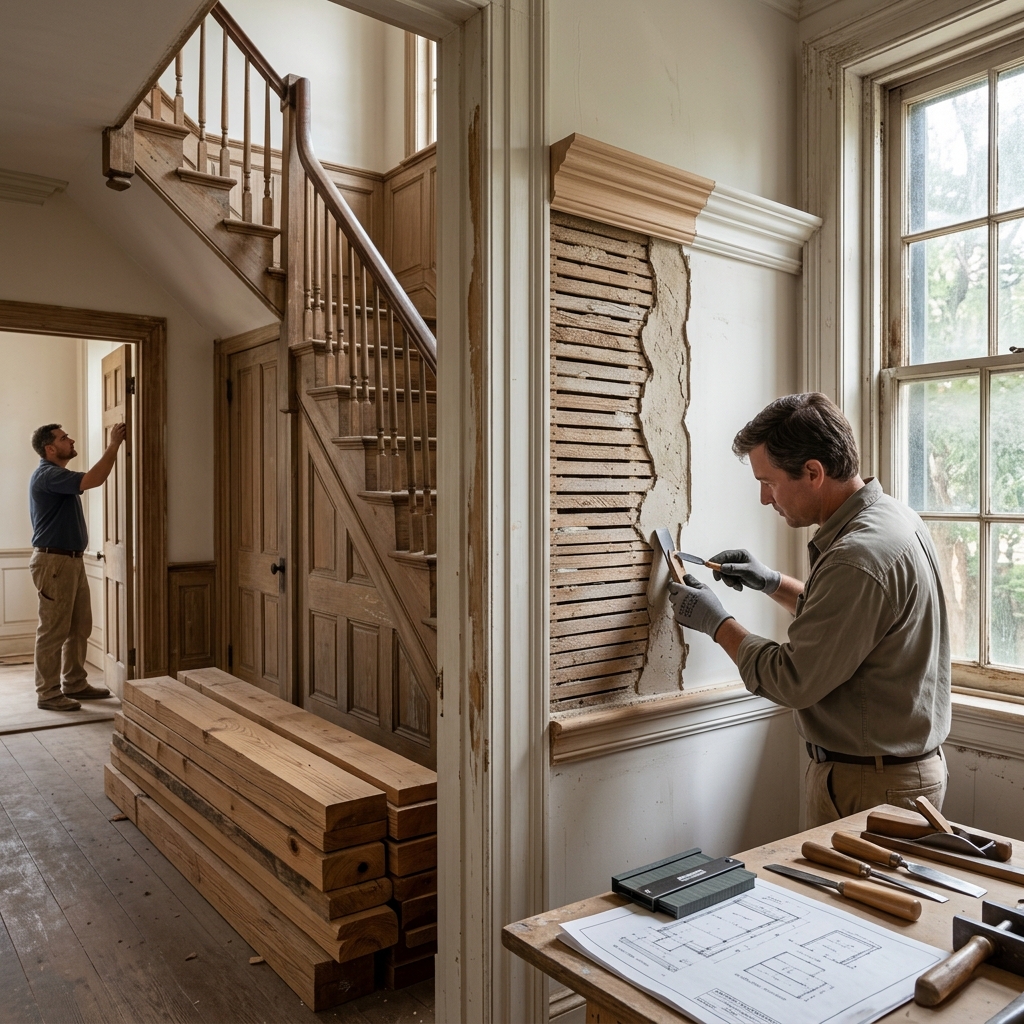
Building codes, meanwhile, ensure structural safety, fire protection, and life safety systems. Modern codes weren’t written with historic homes in mind, which creates legitimate complexity. A generic contractor often sees only the conflict: “Code requires X, but the historic standard says Y, so we’re going with code and demolishing the historic element.”
We see a third path. Modern electrical can run in walls without exposing new conduit if planned carefully. Fire-rated insulation can be added without destroying original plaster if applied strategically. Updated HVAC systems can be installed in basement or attic spaces rather than cutting through original joinery. These solutions require more design work and more skilled labor, but they result in homes that meet current safety standards while retaining historic character.
Here’s what matters to you: we take responsibility for navigating both standards. You don’t need to become an expert in preservation guidelines or code language. We coordinate with the historic district commission, manage permit approvals, and design systems that satisfy inspectors while protecting what’s historic about your home.
When you work with a generic contractor, you often end up as the translator between preservation requirements and code demands. That’s a position you shouldn’t be in.
Craftsmanship Quality and Materials Selection
The quality of materials and execution separates preservation-focused restoration from standard remodeling more visibly than any other factor.
Consider bathroom and kitchen renovations in historic homes. A generic contractor sources cabinets from a big-box distributor, installs them, orders fixtures online, and plumbing and electrical connect to modern systems. Nothing wrong with that per se. But it doesn’t fit a 1920s bungalow or Colonial Revival home. The proportions, details, and materials feel obviously modern and disconnected.
We source or custom-build components that match your home’s period and style. Subway tile in a 1970s-era bathroom might be replaced with authentic hex tile. Original hardware is preserved or matched with reproduction hardware from specialists. Wood cabinetry reflects the home’s era in terms of wood species, joinery, and finish. These choices cost more and take more time, but they result in spaces that feel cohesive and authentic rather than like a contemporary kitchen awkwardly inserted into an old house.
Materials selection also affects durability and long-term performance. Original plaster, for instance, breathes differently than modern drywall. It accommodates seasonal wood movement and moisture fluctuation better in humid Charleston climates. Replacing it with drywall can actually create moisture problems in surrounding framing. We repair and restore original plaster when possible, which preserves its performance characteristics and avoids unintended consequences.
Here’s your actionable takeaway: when meeting with contractors, ask specifically about materials sourcing and finish details for historic elements. If they default to “we’ll match it as closely as possible with modern materials,” that’s fine for non-visible elements. But for visible original work, expect a restoration contractor to have specialized suppliers and techniques.
Project Management and Timeline Reliability
Historic restoration projects move differently than new construction or generic remodeling. Surprises are more frequent and significant. That’s just reality when you’re working within existing structures that span decades or centuries.
A generic contractor often bids a historic project like any other remodel. Fixed price, fixed timeline, relatively narrow scope for change orders. This pricing model creates pressure to skip details, rush through investigative work, and cut corners when unexpected issues appear. You end up paying change order premiums for problems that skilled historic restoration contractors anticipate and budget for.
We manage historic projects with realistic expectations built into the timeline. Phase One involves detailed investigation. We open walls strategically, document existing conditions, and identify hidden issues before the main construction starts. Phase Two incorporates findings into refined plans. Phase Three is execution with flexibility for discoveries that emerge during work.
This approach costs slightly more upfront through the investigation phase. It saves substantially later because we’re not encountering surprises during active construction that require expensive mid-project pivots.
We also build contingencies into timelines. Historic materials sometimes need to be custom-sourced or special-ordered. Preservation-grade concrete repair or plaster work can’t be rushed. Rather than promising a finish date we can’t reliably meet, we provide realistic ranges and communicate proactively as work progresses.
Local Knowledge and Historic District Navigation
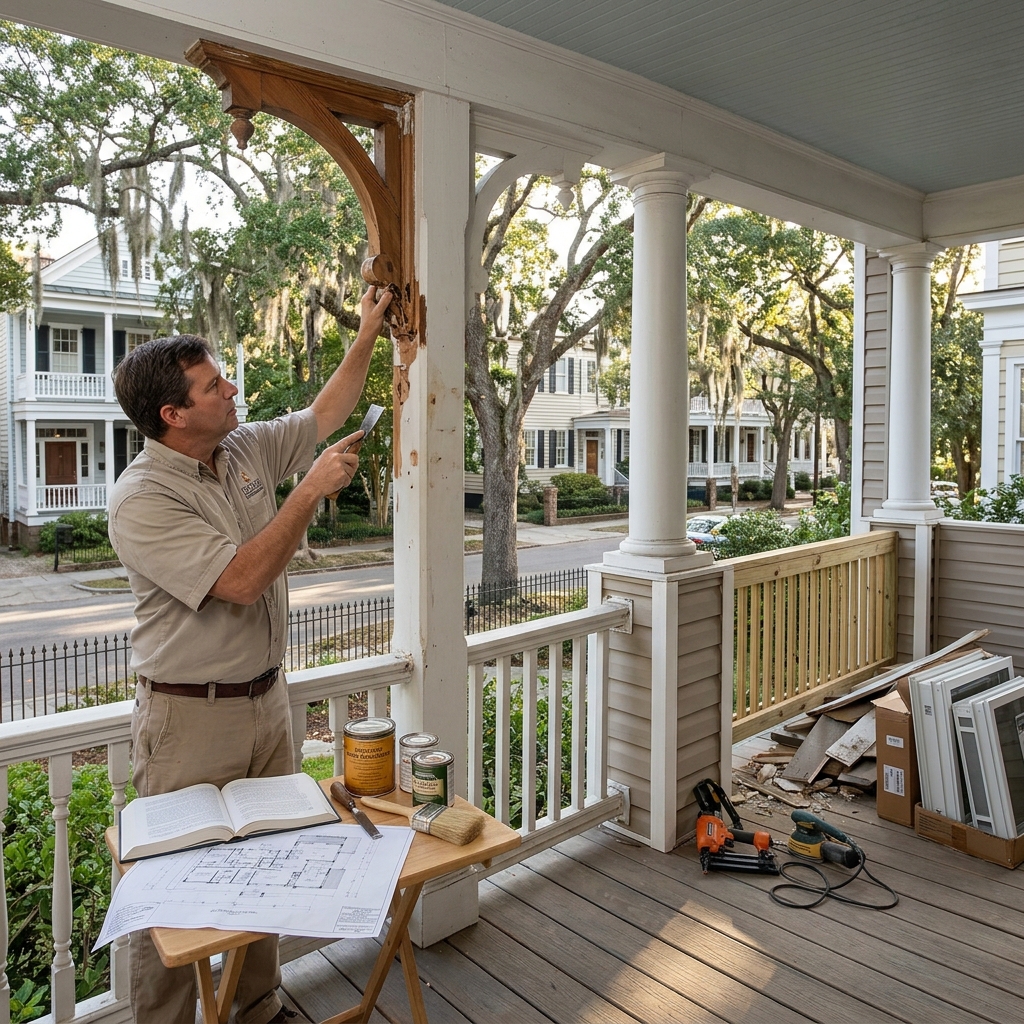
Mount Pleasant and Charleston have distinct historic preservation governance. Some neighborhoods fall under historic district review boards with specific architectural guidelines. Others have less stringent oversight. Some homeowners qualify for historic tax credits that provide real financial benefits. Others don’t. Understanding these local nuances is essential.
We’ve navigated Charleston-area historic district regulations for over 30 years. We know what the Mount Pleasant Historic Preservation Commission approves readily and where they’ll require detailed justification. We understand how state and federal historic tax credits work and which projects qualify. We have relationships with preservation consultants and review board members that facilitate smoother approval processes.
A contractor unfamiliar with local historic guidelines often learns through rejection. You submit plans. The historic district commission requests revisions. Work stops. Timelines slip. Costs increase. A restoration contractor versed in local standards incorporates those requirements from the initial design phase, avoiding the approval delays altogether.
We also advise on decisions that affect your home’s historic status and value. Sometimes a property isn’t formally designated as historic but has character and architectural significance that deserves preservation-focused treatment anyway. We help you understand the tradeoffs: preserving authentic character might slightly increase renovation costs but protects resale value and eligibility for future tax credits.
Cost Transparency and Value Delivery
The most common misconception about historic restoration is that it costs dramatically more than standard remodeling. Sometimes it does. Often it doesn’t. The difference lies in what you’re paying for.
Standard remodeling prioritizes cost efficiency. Materials are inexpensive and widely available. Labor is straightforward. You pay less upfront but often sacrifice design quality, authentic character, and long-term value.
Preservation-focused restoration prioritizes lasting value. Some costs are higher (custom materials, skilled craftspeople, investigation phases). Some are lower (less demolition, less waste, less rework because planning is thorough). The real cost difference often evens out, with restoration actually coming in comparable or even slightly lower than a standard renovation when you factor in the value protection it provides.
Here’s what matters for your decision: we price transparently. We separate design work from construction. We define scope clearly so you understand what’s included. We present contingencies honestly rather than hiding them in vague change order potential. And we explain the value logic behind each significant decision.
When we recommend investing in custom materials or specialized labor, we articulate the payoff: better long-term durability, higher resale value where historic authenticity commands premiums, eligibility for tax credits, or simply a home that feels authentic and cohesive rather than like a generic renovation.
Why We Stand Apart in Historic Restoration
Over 30 years, we’ve become specialists in what others treat as complications. That distinction affects every phase of your project.
Our design team includes professionals trained in preservation principles. Our construction crews include craftspeople skilled in historic repair techniques. Our project managers have navigated Mount Pleasant and Charleston’s historic district approval processes successfully hundreds of times. This specialization means we don’t improvise on your home. We apply depth of knowledge and proven approaches.
We also maintain relationships with specialized suppliers and consultants. When we need period-appropriate materials, we know where to source them. When preservation questions arise, we have preservation specialists we trust. This network accelerates solutions and prevents the delays that plague generic contractors on historic projects.
Perhaps most importantly, we’re invested in this community. Our clients aren’t one-off jobs. They’re neighbors and community members we’ll encounter again at local restaurants and events. That reality shapes how seriously we approach every aspect of a historic restoration.
Our Three-Step Historic Restoration Process
Our process builds preservation principles and informed decision-making into every phase, which is why outcomes consistently exceed what homeowners experience with standard contractors.
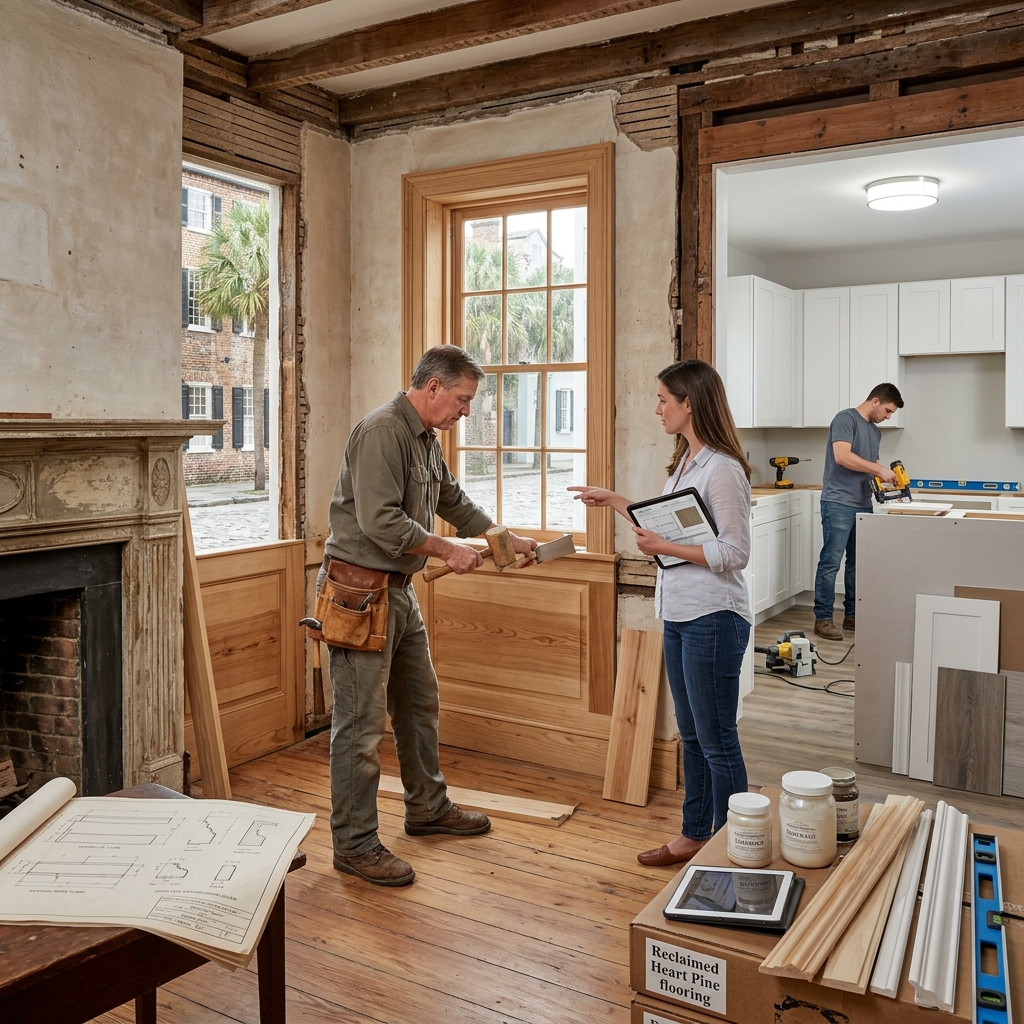
Step One is Discovery and Planning. We meet with you to understand your vision, then conduct detailed investigation of existing conditions. We document original elements, identify hidden issues, and research your home’s history and architectural significance. This phase takes time, but it prevents the surprise-discovery problems that derail other projects. We deliver detailed plans and clear communication about what we’ve learned.
Step Two is Design Development with Preservation Input. Our design team incorporates findings into refined plans. We specify materials that match originals or provide superior performance. We design mechanical systems (electrical, HVAC, plumbing) that function properly without compromising historic character. We navigate preservation and code requirements simultaneously, not sequentially. You review plans in context of realistic budgets and timelines.
Step Three is Coordinated Construction. We execute work with design and construction teams collaborating daily. We manage quality at every phase. We communicate proactively about discoveries that emerge during construction. We maintain our timeline commitments because we’ve built realistic schedules based on thorough planning. And we document the transformation so you have a record of what was preserved and why.
This isn’t just a formal process. It’s a philosophy of respecting your home’s history while making it function beautifully for modern living.
Results That Honor Your Home’s History
The best measure of restoration success isn’t just that a project finishes on budget and on time. It’s that your home looks better, functions better, and feels more authentically itself.
Historic homes restored with preservation principles intact tell their story visibly. Original architectural details shine. Spaces feel coherent because restoration respected the home’s original proportions and character. Mechanical systems work seamlessly because they were designed thoughtfully rather than installed haphazardly. And when you sell, buyers who value authentic character recognize and pay for the quality of work they see.
We’ve restored 1920s bungalows with original woodwork and charm recovered. Colonial Revival homes with period kitchens and bathrooms that function for modern families. Historic structures with structural integrity reinforced invisibly so no one sees modern supports but everyone enjoys the security. Each project becomes a lasting asset that honors the home’s history while enabling your life within it.
The intangible benefit matters too. Living in a well-restored historic home connects you to your community’s architectural heritage. Your home becomes a visible commitment to preservation within its neighborhood. That’s a quality of life benefit that generic remodeling simply doesn’t provide.
Schedule Your Historic Home Consultation
If you own a historic property in Mount Pleasant or Charleston and are considering restoration or remodeling, the next step is straightforward: schedule a consultation with our team.
We’ll meet with you, listen to your vision, ask detailed questions about your home and your goals, and provide honest feedback about what makes sense preservation-wise and budget-wise for your specific situation. There’s no obligation, and you’ll leave the meeting with clearer understanding of what’s possible.
Historic homes deserve more than generic remodeling. They deserve contractors who understand that preservation and modern livability aren’t contradictory. That’s what we deliver at Citadel Enterprises.
Contact us today to discuss your historic home restoration project. Let’s work together to preserve what’s worth preserving while creating the home you need for the future.