
Why Your Kitchen Renovation Deserves Expert Project Management
A kitchen renovation is one of the most impactful investments you can make in your home. It’s where your family gathers, where you prepare meals, and often where guests congregate during gatherings. Yet many homeowners underestimate how complex a kitchen remodel truly is, and they pay the price in delays, unexpected costs, and results that fall short of their vision.
At Citadel Enterprises, we’ve spent over 30 years managing kitchen remodeling projects throughout Mount Pleasant and Charleston. We know what separates a smooth renovation from a frustrating one. It comes down to three things: clear planning, skilled execution, and someone who oversees every detail with accountability. This guide walks you through what to expect and why professional project management matters for your kitchen remodel.
Your kitchen touches nearly every system in your home. Electrical wiring, plumbing, gas lines, HVAC, structural elements, and finishes all converge in one space. When contractors work in isolation without a unified plan, those systems clash. A plumber might install pipes where the electrician wants to run a circuit. The cabinet installer arrives before the walls are finished. Suddenly you’re paying for rework, and your timeline stretches by weeks.
Professional project management prevents these conflicts. We serve as the single point of accountability, coordinating every trade, supplier, and decision so work flows logically and efficiently. We catch problems during the planning phase, not during construction when fixes cost far more.
Beyond logistics, expert management protects your budget and your sanity. Homeowners who manage their own remodel often experience 15-25% budget overruns because unforeseen conditions, scope creep, and change orders accumulate quickly. When we manage the project, we’ve already accounted for typical challenges based on decades of local experience. We know how Mount Pleasant homes are built, what hidden issues we typically encounter, and how to navigate them without blowing your timeline or wallet.
Action step: Before choosing a contractor, ask how they coordinate trades and manage changes. If their answer is vague, that’s a red flag.
The Kitchen Remodeling Challenges Most Homeowners Face
We see common patterns in the kitchens homeowners want to fix, and most of those problems stem from poor planning or rushed decisions during construction.
The first challenge is layout inefficiency. Many Mount Pleasant homes were built decades ago with kitchens that don’t suit modern life. The work triangle (sink, stove, refrigerator) might be awkward. There’s no island for casual dining. Cabinets don’t reach the ceiling, wasting storage. Lighting is dim. Fixing these issues requires rethinking the entire layout, which is where a lot of first-time remodelers get stuck. They delay decisions or make compromises that leave them regretful.
The second challenge is hidden structural or mechanical issues. Once we open walls, we often find outdated wiring that needs replacement, plumbing that’s corroded, or framing damage from moisture. Historic homes in Charleston and Mount Pleasant are particularly prone to this. Homeowners plan for a straightforward remodel and discover they need a full electrical upgrade halfway through construction. Without contingency planning, that’s a budget crisis.
The third challenge is material and fixture selection paralysis. There are thousands of cabinet styles, countertop options, appliance brands, and tile patterns. Homeowners spend weeks scrolling Pinterest, get overwhelmed, and either make impulsive choices they regret or delay the project while trying to achieve perfection.
Finally, many homeowners struggle with inadequate ventilation planning, undersized storage solutions relative to their actual needs, and poor workflow between the kitchen and adjacent spaces like dining rooms or pantries. These issues aren’t apparent until you’re living in the finished space.
Action step: Walk through your current kitchen and list what frustrates you daily. Is it layout, lighting, storage, or functionality? Write it down before meeting with a designer. This clarity drives better decisions.
Our Design-Build Approach to Kitchen Transformations
We use what’s called a design-build remodel model, which means the same firm handles both the design and construction. This approach eliminates a major source of friction that plagues traditional remodels.
In traditional setups, homeowners hire an architect or designer separately, then hire a contractor to build it. The designer’s drawings sometimes aren’t practical to build. The contractor suggests changes that weren’t in the original plan. Everyone blames everyone else, and the homeowner is caught in the middle.
Our design-build process works differently. Our designers talk directly with our carpenters, electricians, and plumbers during the design phase. We design with construction reality in mind, not just aesthetics. We know what’s feasible, what costs more than it should, and where we can add value. This conversation between design and construction happens before you’re locked into a plan.
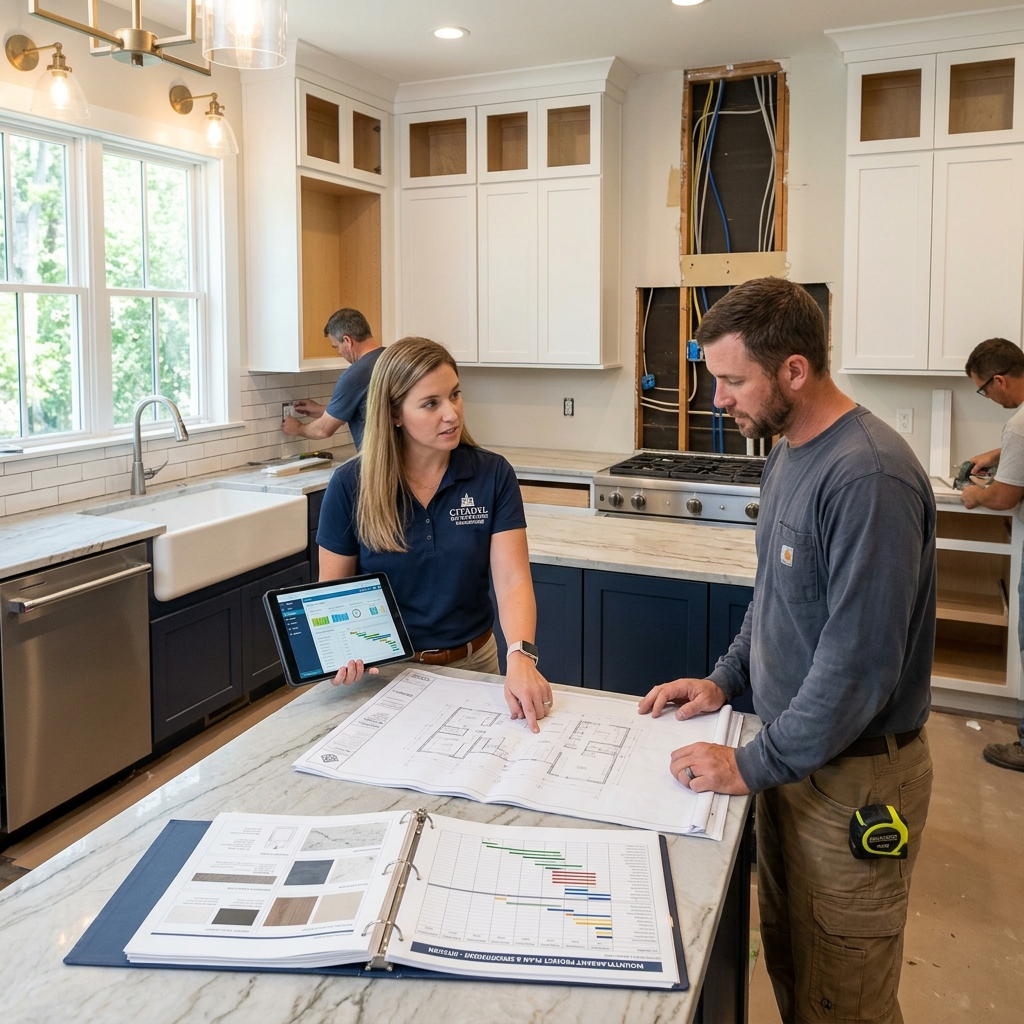
When a homeowner signs on with us for a kitchen remodel, our designer sits down to understand how you use your kitchen. Do you cook elaborate dinners or mostly reheat and assemble? Do you entertain frequently? Who shops and cooks? Where do kids do homework? How much counter space do you actually need? These conversations lead to a design that fits your life, not just a design that looks good in renderings.
Once we agree on a direction, our construction team reviews the plans and provides real feedback. Can we route the plumbing more efficiently? Should we relocate an outlet? Are there structural challenges we need to account for? Those adjustments happen during design, not during construction when they’re expensive.
Action step: When interviewing kitchen remodeling firms, ask whether the same company handles design and construction. If they coordinate separately, ask how they manage the handoff and resolve conflicts.
How Professional Planning Protects Your Investment and Timeline
A detailed, well-researched plan is your primary defense against overruns. We create plans that account for the realities of Mount Pleasant homes.
Many kitchens in our area are in homes built in the 1970s through 1990s. Foundation settling is common, which means walls aren’t perfectly plumb. Electrical panels are often undersized for modern kitchen loads. Plumbing configurations are sometimes inefficient. During our planning phase, we already factor these conditions in. We don’t discover them mid-construction and surprise you with change orders.
We also build contingency into timelines and budgets based on historical patterns. If we’re opening walls, we allocate time and budget for typical findings. If we’re running new circuits, we know what breaker upgrades might be needed. If we’re relocating plumbing, we know what code compliance costs. This isn’t padding; it’s realistic planning.
Our three-step process (which we detail later) includes a thorough site assessment, detailed planning with homeowner input, and a locked contract that minimizes surprises. Once construction begins, change orders are rare because we’ve already worked through the variables.
Timeline protection works similarly. We schedule trades in a logical sequence. We coordinate material delivery so nothing sits idle on site. We maintain steady progress so momentum carries the project through. Homeowners who manage their own project often create delays by making decisions too slowly or having contractors stand around waiting for direction. We eliminate that friction.
We also maintain regular communication throughout the project. You’ll receive weekly updates, and you’ll meet with us in person to review progress and address any issues immediately. Small problems get fixed before they become big ones.
Action step: Ask any contractor for their last three kitchen project timelines. Compare estimated vs. actual completion dates. Track record matters more than promises.
Kitchen Design That Reflects Your Lifestyle and Home Value
A kitchen remodel is deeply personal. Your kitchen should reflect how you actually live, not how a magazine says you should live.
That said, we always design with resale value in mind, even if you’re not planning to sell soon. A kitchen that’s too trendy or too specific to one person’s unusual preferences can hurt resale value. We balance personal style with timeless design principles and proven choices that appeal to future buyers.
We think about your kitchen in zones. The cooking zone should have adequate counter space, good ventilation, and proximity to storage. The prep zone works best near the sink and major refrigeration. The cleanup zone (dishwasher, sink, trash) should be positioned for easy access. The serving and dining transition should flow naturally to your dining room. We also identify a beverage station or secondary prep area if space allows.
Lighting transforms a kitchen’s functionality and feel. We layer lighting with task lights over work areas, ambient lighting for general visibility, and accent lighting that highlights finishes or creates mood. Many kitchens we remodel have poor lighting, which makes cooking feel like a chore and makes the space feel smaller.
Storage is often underestimated. We talk about vertical storage, pull-out solutions, and pantry organization because dead space in your cabinet is wasted opportunity. We also think about appliance placement. Where does your coffee maker live? Your stand mixer? Where do you want a beverage cooler or wine fridge? These decisions matter.
Color and finish choices should reflect your preferences, but we guide clients toward selections that will feel current in five years and won’t clash with adjacent rooms. Neutral cabinetry with bold accents in hardware, backsplash, or a statement appliance is a formula we see work beautifully.
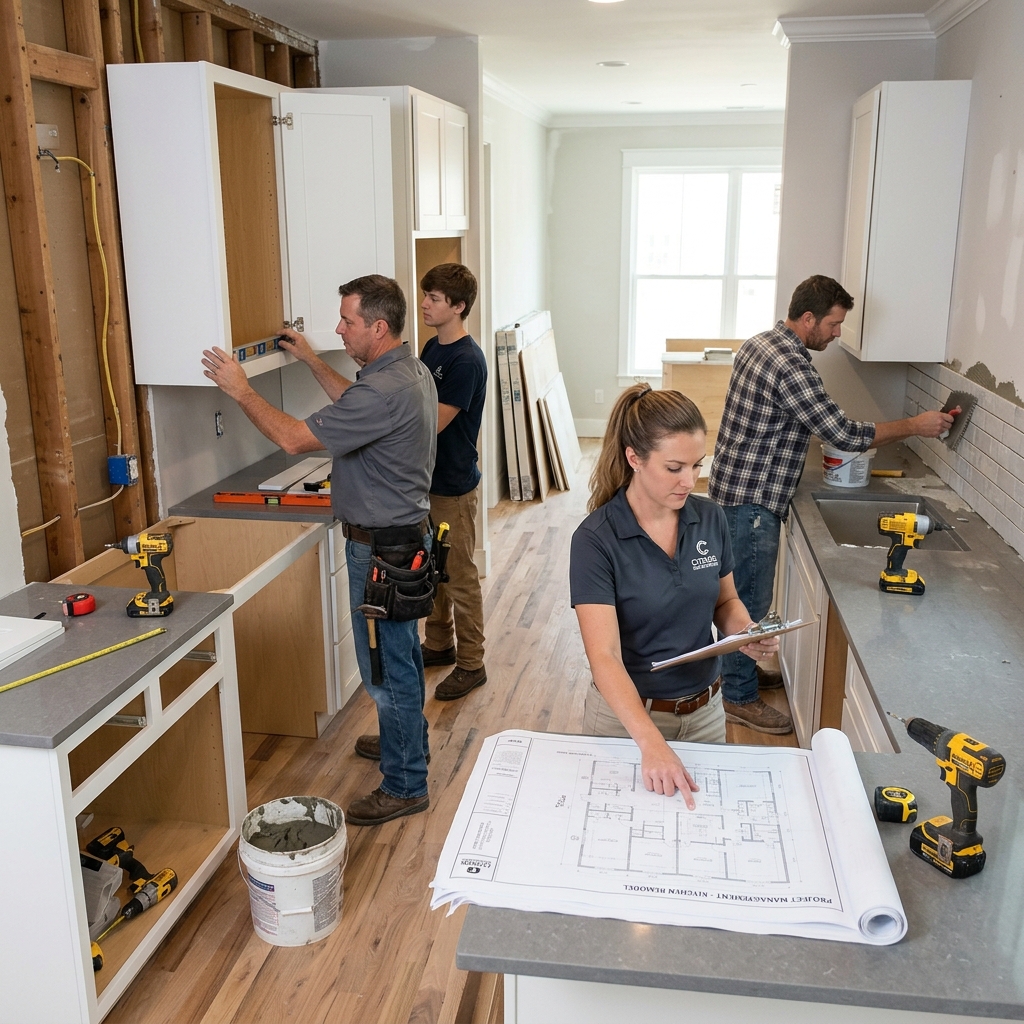
Action step: Create a Pinterest board or save photos of kitchens you love. Note what appeals to you about each one (the layout, colors, materials, functionality). Share it with your designer. This visual reference is far more useful than vague descriptions.
Quality Materials and Skilled Craftsmanship Throughout Your Project
A beautiful design executed with subpar materials or poor craftsmanship is disappointing. We source quality materials and employ skilled tradespeople because that’s the foundation of a kitchen that lasts.
We work with cabinet manufacturers that offer solid wood construction, quality hardware, and finishes that resist moisture and daily wear. We specify countertops based on how you’ll use them. If you cook heavily, a quartz surface offers durability and low maintenance. If you prefer natural stone, we use finishes and sealers that suit your lifestyle. If butcher block or reclaimed wood appeals to you, we explain the maintenance commitment upfront.
Appliances matter for both performance and longevity. We recommend brands with strong local service and parts availability. If your refrigerator breaks, you want a technician who can reach you quickly. We also guide you on capacity and features that match how you cook, not just what looks trendy.
Backsplash, flooring, and hardware are finishing layers that define the kitchen’s character. We specify durable materials that are properly installed. Poor tile installation leads to grout failure and water damage. Poor flooring installation creates gaps, movement, and wear patterns. Cheap hardware fails under daily use.
Our electricians and plumbers are licensed and experienced. They know Mount Pleasant building codes and can navigate the specifics of your home’s systems. We also ensure all work is permitted and inspected so your kitchen remodel is legally documented and insurable.
Craftsmanship extends to the small details. Cabinet doors are flush and aligned. Drawers glide smoothly. Tile is straight and level. Caulk and grout are clean. Finish work is meticulous. These details aren’t optional; they define whether your remodel looks expensive or cheap.
Action step: Ask to tour one of our completed kitchens. Run your hand along the cabinetry, open drawers, turn on appliances. You’ll feel the difference between rushed work and careful craftsmanship.
The Three-Step Process We Use to Deliver Results
Our process is straightforward and transparent, designed to minimize surprises and keep you in control.
Step One: Discovery and Assessment. We start with a comprehensive conversation about your kitchen, your needs, and your budget. We walk through your current space and identify what works and what doesn’t. We assess the structural condition, mechanical systems, and any issues we anticipate. We review your home’s layout, traffic flow, and how your kitchen connects to other living spaces. We also discuss your timeline and financing. This step typically takes a week or two. We gather information, think about possibilities, and prepare for design.
Step Two: Design and Planning. Our designer creates floor plans, elevation drawings, and renderings that show what your new kitchen will look like. We iterate based on your feedback. We finalize material selections (cabinets, countertops, backsplash, appliances, hardware, lighting, flooring). We obtain any necessary permits. We also prepare a detailed construction timeline and a locked contract with pricing. This step typically takes 4-6 weeks, depending on how many revisions you want. You’re in control of the design, and you don’t move forward until you’re genuinely excited about the plan.
Step Three: Construction and Completion. Once you approve the design and sign the contract, our construction team takes over. We coordinate all trades, manage the timeline, handle material delivery, and keep you updated weekly. We’re on site regularly to ensure quality and address issues immediately. Typical kitchen remodels take 8-12 weeks depending on scope. We schedule regular walkthroughs where you see progress and provide feedback. When we’re done, we do a final inspection with you, address any punch-list items, and provide documentation of all work completed.
This three-step approach spreads decision-making across the planning phase, not during construction. You’re not tired and stressed when making major choices. You’re thoughtful and intentional.
Action step: Look for a contractor that maps out their process this clearly. Vague processes lead to vague outcomes.
Real Kitchen Renovations We’ve Completed in Charleston and Mount Pleasant
We’ve completed over 30 years of kitchen remodels throughout the Charleston area. A few examples show the range of projects we handle.
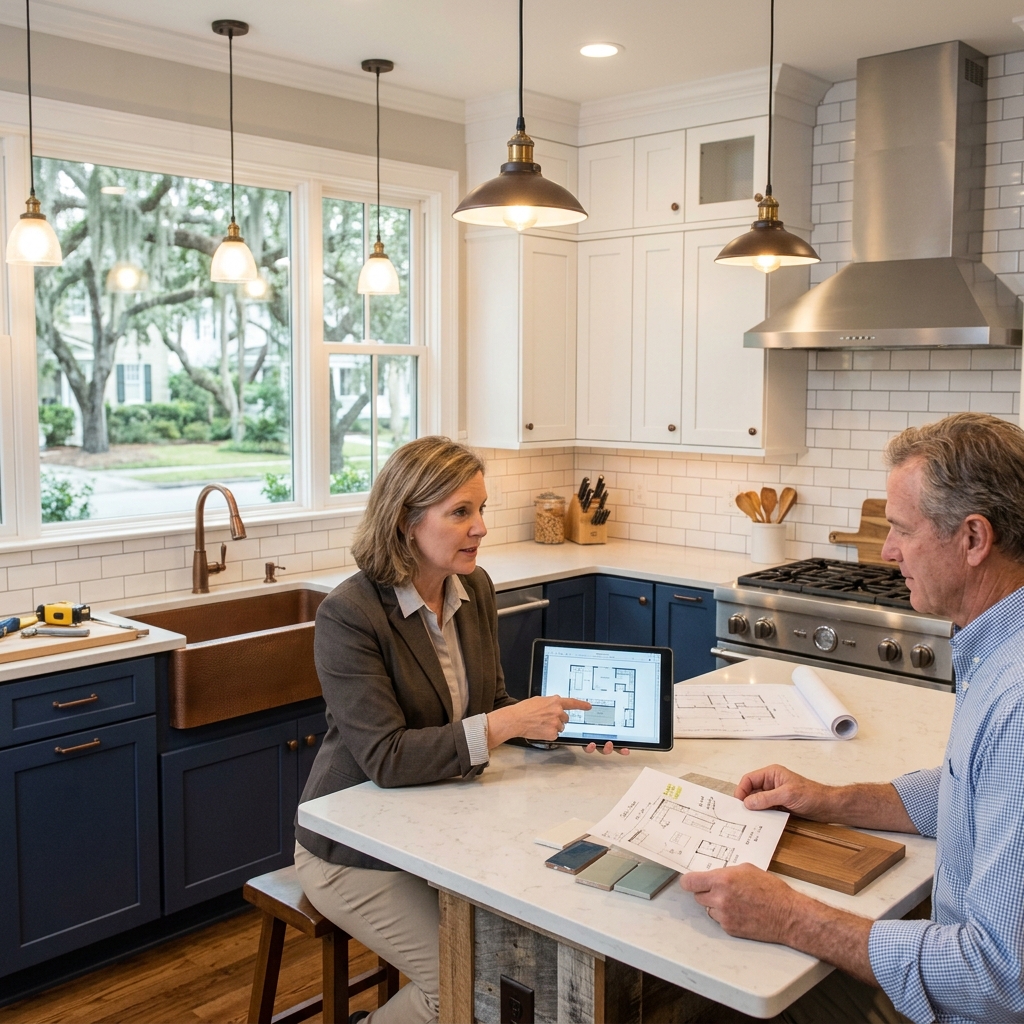
One Mount Pleasant homeowner had a 1970s kitchen with an inefficient layout and dark, cramped spaces. We opened up the kitchen to the adjacent living room by removing a non-load-bearing wall, creating an open-concept space that doubled the perceived size. We relocated the refrigerator to optimize the work triangle. We added an island with seating for casual dining and prep space. New lighting, custom cabinetry, and a subway tile backsplash tied the design together. The homeowner went from avoiding the kitchen to enjoying time there. The remodel took 10 weeks.
Another project was a historic Charleston home where the kitchen was original to the 1920s construction. The owner loved the character but needed modern function. We carefully preserved original trim and architectural details while completely updating the systems and finishes. We installed modern appliances in cabinetry that echoed the original style. The result honored the home’s history while making the space livable for a contemporary family.
A third project was a transitional-style kitchen for a homeowner who entertained frequently. We designed a large island that served as both food prep and a casual bar for guests. We added a separate beverage station. We specified professional-grade appliances. Abundant storage kept the space organized for large-scale cooking. This kitchen needed to perform at high capacity, and the design reflected that.
In each case, the homeowner’s lifestyle and home’s character shaped the design. We didn’t impose a template. We listened, planned, and delivered a kitchen that made their daily life better.
Action step: Ask your contractor for references from kitchen remodels completed in the past 2-3 years. Call them directly and ask about the experience.
Why Working With a Single Firm Simplifies Your Remodel
Hiring a design firm and a construction firm separately sounds logical until you’re in the middle of a remodel and the two don’t align.
The designer specifies a layout that’s beautiful but harder to build than necessary. The contractor suggests changes that undermine the design. You’re caught between them, unclear who to trust. Costs shift. Timeline extends. Communication breaks down.
By choosing a single firm for design and construction, you eliminate that friction. We stand behind our designs because we build them. Our designers talk to our carpenters during the planning phase, so we design with buildability and efficiency in mind. Our construction team is invested in executing the design beautifully because it represents our entire firm’s work.
You also have one point of contact throughout the project. One person knows your kitchen’s history, your preferences, your budget, and your timeline. You don’t repeat yourself to multiple parties. You don’t manage relationships between separate vendors. You focus on enjoying your new kitchen once it’s done.
A single-firm approach also creates accountability. If something goes wrong, there’s no finger-pointing between designer and builder. We own the entire experience and take responsibility for making it right.
Action step: When comparing quotes, don’t just compare price. Compare the structure of the firm. Is it design-build under one roof, or are you coordinating separately? The cheapest quote often comes from the structure with the most risk of problems.
Getting Started With Your Mount Pleasant Kitchen Remodel
If you’re ready to move forward with a kitchen remodel, here’s what comes next.
Contact us for an initial consultation. This is a no-pressure conversation where we learn about your project and you learn about our process. We’ll discuss your timeline, budget, and vision. We’ll answer any questions about how we work. If it’s a good fit, we’ll schedule a site visit and formal discovery meeting.
Before you reach out, think about a few things. What’s your budget range? What’s your timeline? Are there specific challenges in your current kitchen that drive the remodel? What’s your style preference? You don’t need perfect answers, but having thought about these questions helps the conversation move faster.
We serve homeowners throughout Mount Pleasant and Charleston who value quality craftsmanship and professional project management. If that’s you, we’d like to help bring your kitchen vision to life.
Reach out today to schedule your consultation. Your dream kitchen is within reach.