
Your beach house has two jobs. It needs to look fantastic, of course—that first impression is everything. But just as importantly, it acts as your home's first line of defense against the relentless coastal weather here in the Lowcountry. A smart exterior remodel isn't just a facelift; it's a serious investment in your home's ability to stand tall against salt, sun, and storms.
Why Remodeling Your Beach House Exterior Is a Smart Investment
Let's be clear: overhauling your home's exterior in a place like Charleston, Isle of Palms, or Sullivan's Island is about more than just boosting curb appeal. It’s a strategic move to protect your property and significantly increase its value for the long haul.
The coastal environment is uniquely demanding. The combination of corrosive salt spray, intense UV rays, and the ever-present risk of hurricanes requires much more than what you'd find in a standard suburban home. You need an approach that marries tough, resilient materials with the timeless architectural style our region is famous for.
This guide cuts through the generic advice. We'll walk you through a real-world plan for an exterior renovation that feels right at home in the Lowcountry. You’ll learn how to balance our area's historic charm with the latest in storm-proof building technology.
We're going to dive into the details that matter most:
Choosing the Right Materials: We’ll look at siding, roofing, and windows that won’t buckle under the pressure of salt air and high humidity, saving you from constant upkeep.
Getting the Architecture Right: From elevated foundations to classic color palettes, we’ll cover how to capture that authentic Lowcountry look.
Navigating Local Codes: Coastal construction comes with a unique set of rules. We’ll help you make sense of the permitting process and building codes.
Connecting with the Outdoors: Learn how to blend your home into its beautiful surroundings with smart landscaping and functional outdoor living areas.
The desire for a place by the sea is stronger than ever. In fact, a whopping 52% of vacation home buyers are looking specifically at beach destinations, which keeps the demand for quality waterfront properties high. Here in a premium market like Charleston, a well-planned exterior project can boost your property's value by as much as 10-15%.
It's also about protecting that investment from risks like coastal erosion, which is a growing concern for many U.S. beaches. You can dig into more of the latest coastal real estate trends in this report from the National Association of REALTORS®.
At the end of the day, investing in a durable, beautiful beach house exterior is about more than just a remodel. It's about securing your family's coastal retreat, making sure it’s a source of joy—and a valuable asset—for generations to come, no matter what Mother Nature has in store.
Selecting Materials That Withstand Sun, Salt, and Storms
A South Carolina beach house exterior is in a constant battle with a tough trio: intense sun, corrosive salt air, and hurricane-force winds. Picking the right materials isn't just about looks; it's the single most important decision you'll make for your home's longevity and your own peace of mind. Get it wrong, and you're signing up for a future of rot, rust, and constant repairs.
Let's be real—the moisture and salt here in the Lowcountry are absolutely relentless. I've personally seen beautiful wood siding start to peel and warp in just a couple of years, and standard metal fixtures turn into a rusty mess after a single season. Your material choices need to be ready to fight back from day one.
Investing in a resilient exterior isn't an expense; it's a direct investment in your property's value and your ability to enjoy it.
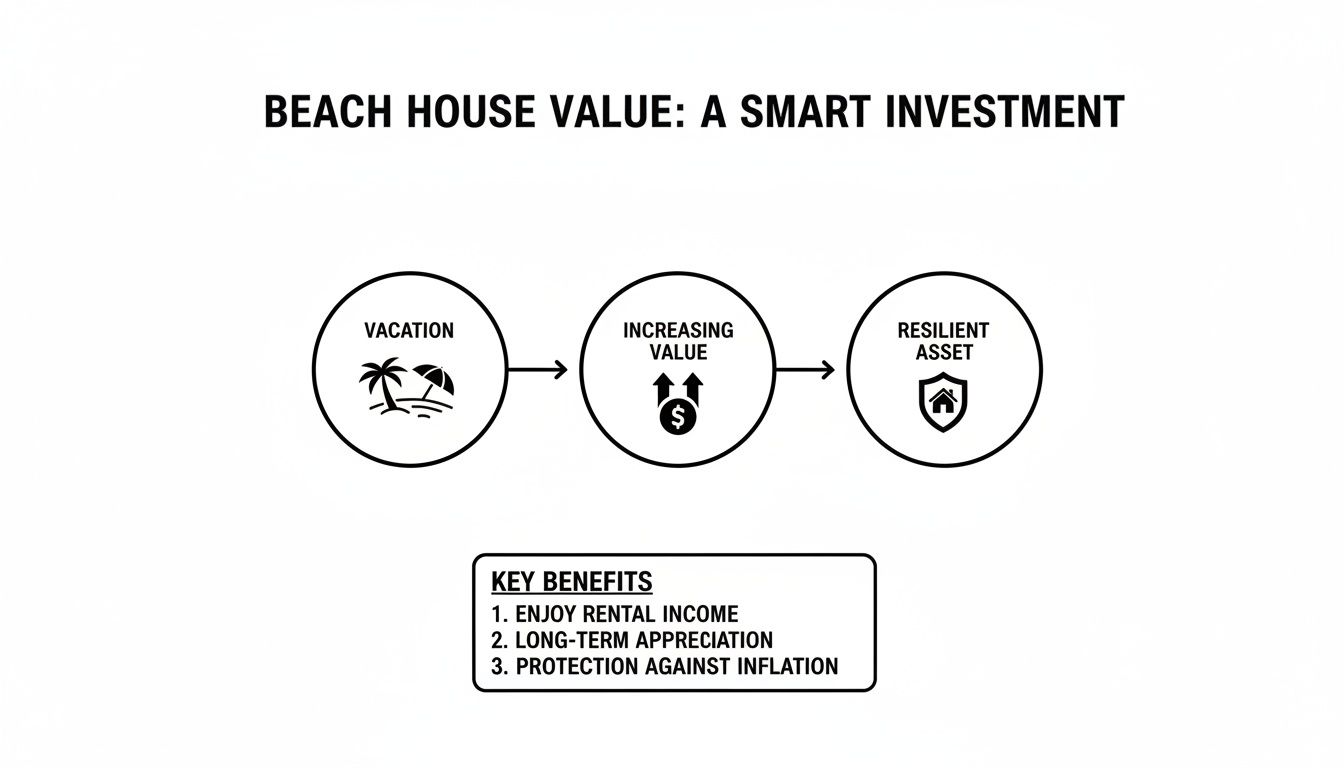
This just drives home the point: a well-built exterior is key to a property that holds its value, is ready for vacationers, and can stand up to whatever the coast throws at it.
The Best Siding for Coastal Durability
When we talk siding, the conversation usually lands on classic wood versus modern composites. While nothing beats the charm of traditional wood, it demands a ton of upkeep in our humid climate. You're looking at frequent painting and sealing just to keep rot and insects at bay.
For this reason, fiber cement siding is hands-down the best choice for a Lowcountry beach house exterior. Products from trusted names like James Hardie are specifically engineered to shrug off moisture, salt spray, and pests. It simply doesn't swell or warp the way wood does, and it holds paint for years longer, which is a huge win for your wallet and your weekend.
But it’s not just about durability. Fiber cement is also non-combustible, giving you an added layer of fire protection that's becoming a bigger deal in coastal building codes. The initial cost might be higher than vinyl, but the return on investment comes from its incredible lifespan and minimal maintenance.
Roofing That Defies Hurricanes
Your roof is the primary shield protecting your home when a storm rolls in. High-end architectural shingles are a decent option, but if you want the best, a standing-seam metal roof is the gold standard for coastal resilience. These things are built to last, often for 50 years or more, with next to no maintenance.
The interlocking panels are exceptionally wind-resistant—a non-negotiable feature in a hurricane zone. Many homeowners also get a nice surprise on their insurance bill. It’s not uncommon to see premiums drop by as much as 25% after installing a fortified metal roof in a high-risk area.
Plus, today’s metal roofs come in a huge range of colors and finishes, so they look great on everything from a historic Charleston single house to a sleek, modern build. They shed water like a duck's back, resist rust (with the right coating), and reflect the sun's heat, which can really help lower your A/C bills during our sweltering summers.
Key Takeaway: Choosing premium materials from the start is a foundational investment. It’s not just about one piece, but how the entire exterior system—siding, roof, windows—works together to protect your home for decades.
A Quick Look at Your Material Options
Choosing the right material involves balancing cost, looks, and long-term performance. Here’s a straightforward comparison to help you decide what’s best for your Lowcountry home.
Coastal Exterior Material Comparison
| Material | Durability in Coastal Climate | Typical Maintenance | Relative Cost | Best For |
|---|---|---|---|---|
| Fiber Cement Siding | Excellent. Resists moisture, rot, salt, and pests. | Low. Repaint every 10-15 years. | Mid to High | Homeowners seeking the best balance of durability, aesthetics, and low maintenance. |
| Metal Roofing | Excellent. Withstands high winds, long lifespan (50+ years). | Very Low. Occasional inspection for coating integrity. | High | The ultimate storm protection and long-term value, especially in hurricane zones. |
| Wood Siding (Cedar/Cypress) | Moderate. Prone to rot and insects without constant care. | High. Requires frequent sealing, painting, or staining. | Mid to High | Achieving a specific historic or natural aesthetic where budget and maintenance are not primary concerns. |
| Architectural Shingles | Good. Wind ratings up to 130 mph, but susceptible to damage from flying debris. | Low. Periodic checks for lost or damaged shingles after storms. | Mid | A cost-effective and reliable roofing choice for those not opting for metal. |
| Impact-Rated Windows | Excellent. Designed to resist wind and debris impact. | Low. Standard cleaning. Frame material dictates other maintenance. | High | Essential, non-negotiable protection for all coastal homes. |
This table shows there’s a clear winner for durability and low upkeep in our climate: the fiber cement and metal roof combination. While other options have their place, they often come with compromises you need to be prepared for.
The Non-Negotiable Role of Impact-Rated Windows and Doors
Standard windows and doors are the weakest link in a beach house during a storm. All it takes is one broken window for a catastrophic pressure change to occur inside, which can literally blow the roof off. This is why impact-resistant windows and doors are an absolute non-negotiable.
These products are built tough, with laminated glass and reinforced frames designed to take a hit from flying debris during a hurricane. They come with a Design Pressure (DP) rating, which tells you how well they resist wind and water. For the Lowcountry, you need to work with your contractor to select a DP rating that meets or exceeds the code for your specific location and flood zone.
Beyond storm safety, these windows are fantastic insulators, cutting down on noise and blocking UV rays that can fade your floors and furniture. They're a critical part of a complete, storm-ready exterior.
Experienced local builders have been dealing with Lowcountry challenges like salt corrosion for decades. They often use marine-grade paints that can last 15-20 years, a huge jump from the standard 5-7. As construction trends move toward resilience, these smarter choices not only protect your home but can also increase its value, sometimes by 12-20% for waterfront properties. To get a broader perspective on this trend, you can dig into the 2023 Global Construction Survey findings.
Capturing Authentic Lowcountry Architectural Style
A true Lowcountry beach house doesn’t just sit on the coast; it feels like it belongs there. The design itself tells a story about our history, our climate, and the relaxed way of life we cherish. Getting this style right is about so much more than picking a paint color—it's about understanding the specific elements, both functional and beautiful, that make these homes so iconic.
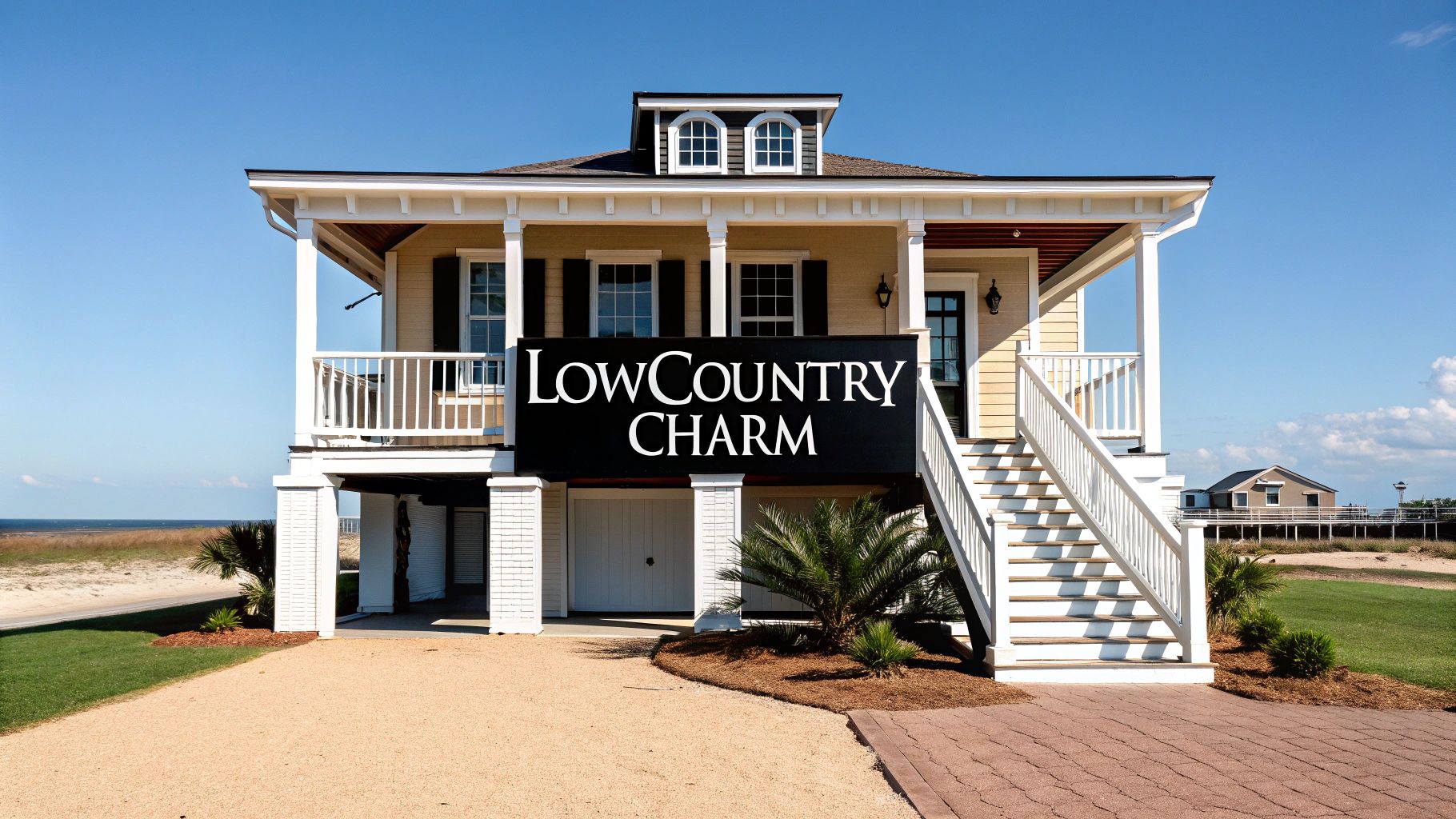
At its core, the style grew out of a direct response to our subtropical climate. Those wide porches, which we call piazzas, weren't just for looks. They were a necessity for creating shade and catching sea breezes long before air conditioning existed. The same goes for tall ceilings and large double-hung windows—every feature was designed to encourage airflow and keep homes cool through the muggy summers.
Signature Architectural Elements
To get that authentic feel, you need to incorporate the key features that define our regional architecture. These aren't just stylistic flourishes; they offer real, practical benefits for any home on the coast.
Elevated Foundations: This is non-negotiable on the coast. Driven by the need for protection from flooding and storm surge, a raised foundation is a hallmark of Lowcountry design. Whether it's traditional brick piers or modern pilings, lifting the main living area is a critical feature that also happens to improve airflow and capture better views.
Expansive Piazzas: A real piazza is an outdoor living room, not just a porch. It should feel generous. Ideally, they stretch across the entire front of the home and sometimes wrap around the sides. These deep, covered spaces are essential for enjoying the outdoors while staying protected from the intense sun and our famous afternoon thunderstorms.
Functional Shutters: Historically, louvered shutters were all about privacy, security, and ventilation. Today, they remain a vital part of the look. For true authenticity and storm-readiness, think about operable Bahama shutters for upper levels and classic colonial-style shutters below.
We often see clients confuse the formal, historic aesthetic of downtown Charleston with the more relaxed vibe of the barrier islands. While they share roots, a Sullivan’s Island home will typically feature a more casual interpretation with wider porches and less ornate detailing, embracing a true beach house feel.
Choosing a Timeless Coastal Color Palette
Color is huge in defining your beach house's personality. The classic Lowcountry palette is pulled directly from the surrounding landscape—the sky, the sea, the sand, and the marsh grass. You want colors that complement the brilliant coastal light, not fight against it.
Crisp whites and soft, misty grays are go-to choices that always look sharp against a clear blue sky. These classic neutrals reflect the sun's heat and give your home a clean, airy feel that just works by the ocean. For accents on shutters and doors, draw from nature: sandy beiges, subtle marsh greens, or watery blues.
The Story Behind Haint Blue
If there's one defining color in the Lowcountry, it's the "Haint Blue" you see on porch ceilings everywhere. This soft, chalky blue-green is so much more than a pretty color; it’s steeped in local Gullah Geechee folklore.
The tradition says that the color was painted on porch ceilings, window frames, and doors to ward off "haints," or spirits. The belief was that spirits couldn't cross water, and this specific hue was meant to mimic the look of water, creating a protective barrier around the home.
Beyond its fascinating history, Haint Blue might have a practical benefit, too. Many locals swear it deters insects like wasps and spiders from building nests because they mistake the blue ceiling for the sky. While the science on that is debatable, you can't deny the calming, sky-like feeling it brings to a piazza.
Painting your piazza ceiling Haint Blue is one of the easiest and most meaningful ways to give your beach house a true sense of place. It’s a small detail that makes a huge impact, connecting your home to a rich cultural tradition.
Blending Your Home with Outdoor Living Spaces
A Lowcountry beach house is more than just the structure itself; it’s about how it connects with the stunning, yet unforgiving, coastal landscape. The best remodels don’t just stop at the siding. They create outdoor living spaces that feel like a seamless extension of the home, blurring that line between inside and out. It’s a move that not only expands your usable square footage but also grounds your home in its beautiful surroundings.
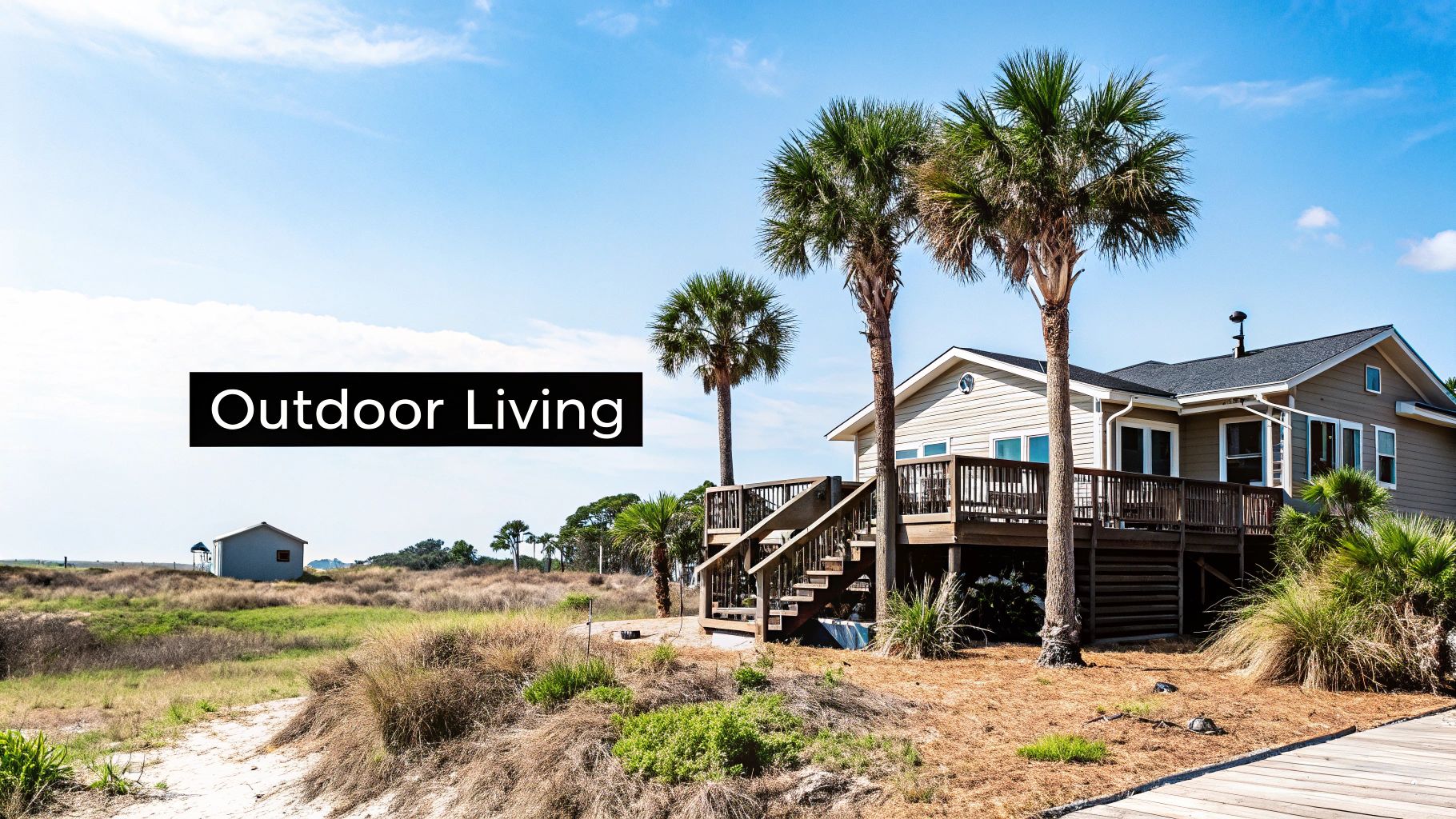
The key is to work with the environment, not against it. Forget trying to force plants and materials that belong in a different climate. By respecting the local ecosystem—from the sandy soil to the salt spray—you can design an outdoor space that’s not just beautiful but genuinely resilient.
Landscaping with Native, Salt-Tolerant Plants
Let go of the idea of a perfectly manicured lawn and delicate flower beds. The secret to a thriving coastal garden is to embrace the plants that already call this place home. Native species are perfectly adapted to our sandy soil, high humidity, and constant salt exposure. Choosing them isn't just an aesthetic decision; it's a practical one that saves you headaches and money on irrigation and chemicals down the road.
Here are a few of my go-to champions for a Lowcountry landscape:
Sabal Palmetto: It’s our state tree for a reason. This palm is incredibly tough, provides that classic coastal look, and has a root system that’s fantastic for preventing soil erosion.
Muhly Grass: An absolute showstopper in the fall, this ornamental grass throws up feathery pink plumes and is incredibly drought-tolerant once it gets settled.
Yaupon Holly: This versatile evergreen can be a shrub or a small tree. It laughs at salt spray and gives you a nice splash of green all year long.
Sea Oats: If your property touches the dunes, planting sea oats is non-negotiable. Their deep roots are what hold our coastline together and are a critical defense against erosion.
These plants don't just survive; they create a sustainable little ecosystem that supports local wildlife and demands very little from you.
Your coastal landscape is your first line of defense. By choosing plants that anchor the soil and drink up excess water, you're actively protecting your home's foundation from the damage caused by heavy rains and storm surge.
Managing Water with Smart Drainage Solutions
Here in the Lowcountry, we all know that when it rains, it pours. Proper drainage isn't a "nice-to-have"—it's an absolute must to keep water from pooling around your foundation and causing serious structural damage over time. A stunning exterior means nothing if the ground it’s built on is turning to mush.
We need to think beyond just gutters and downspouts. Smart drainage should be integrated right into your landscape design.
Permeable Pavers: For driveways, paths, and patios, these are a game-changer. They look fantastic and allow rainwater to soak right through into the ground, drastically cutting down on runoff.
French Drains: It’s a simple concept—a gravel-filled trench—but a strategically placed French drain can be incredibly effective at capturing and redirecting water away from your foundation.
Rain Gardens: Think of these as beautiful, functional sponges. They are shallow, landscaped depressions planted with water-loving natives designed to collect runoff and let it slowly absorb into the soil.
Designing Functional and Durable Outdoor Rooms
The final piece of the puzzle is creating the outdoor "rooms" where you’ll actually want to spend your time. On the coast, these spaces have to be every bit as durable as they are inviting. Your material choices here are just as critical as they are for your home’s roof or siding.
For decking and porches, it’s hard to beat a dense hardwood like Ipe. It's a significant upfront investment, no question. But its natural resistance to rot, insects, and decay means it can last for decades with very little fuss, making it a smart long-term choice. You can see how these materials come together in our portfolio of beautiful and resilient outdoor living projects.
When you're outfitting an outdoor kitchen or seating area, remember that salt air is corrosive. Look for materials like powder-coated aluminum, marine-grade stainless steel, and high-quality all-weather wicker. By thoughtfully combining tough plants, smart drainage, and durable materials, you create a complete, cohesive exterior that’s truly built for life on the coast.
Making Sense of Coastal Building Codes and Permitting
Remodeling a beach house in the South Carolina Lowcountry isn't your average project. It means working with a whole different playbook, one written by Mother Nature herself. The building codes and permits here aren't just red tape; they're essential rules designed to protect your home, your investment, and our beautiful coastal environment.
You absolutely can't afford to cut corners. These regulations dictate nearly everything about your exterior remodel, from how high your first floor needs to be to the specific fasteners required for your siding. Trying to sidestep these rules is a recipe for disaster, often leading to stop-work orders, hefty fines, and the heartbreaking need to tear out completed work.
The Big Two: Wind and Water
When you boil it all down, the most critical regulations for a coastal homeowner are about handling wind and water. Your exact location dictates which specific codes apply, and they often stack on top of each other, with local town ordinances adding another layer to federal requirements.
You'll hear two terms over and over again:
FEMA Flood Zones: The Federal Emergency Management Agency (FEMA) creates detailed flood maps for the entire coast. If your home falls into a V-Zone (Velocity Zone), you're in an area with the highest risk of storm surge. This triggers the strictest building standards imaginable.
Wind Speed Requirements: Coastal South Carolina is, unsurprisingly, a high-wind zone. Every part of your home's exterior—from the roof and windows down to the straps connecting your walls to the foundation—must be designed and built to withstand powerful hurricane-force winds.
In Charleston, where Citadel Enterprises has been building since 1991, we often find ourselves restoring historic beach homes. Many iconic features, like wraparound porches and raised foundations, were originally designed after the turn of the century to lift homes 10-15 feet above sea level in response to devastating hurricanes. It's fascinating how this historical wisdom lines up perfectly with modern codes that demand elevated structures and wind resistance up to 150 mph in some areas. You can find more information on these trends in the 2023 Global Status Report for Buildings and Construction.
Don't Forget the Neighborhood Rules
On top of the safety and structural codes, many Lowcountry communities have their own Architectural Review Boards (ARBs) or powerful HOAs. These groups have their own rulebooks focused entirely on aesthetics.
They get to weigh in on everything from the color of your front door and the type of siding you choose to your fence design and landscaping. Getting their approval is a crucial first step—you often need their sign-off before you can even apply for a building permit with the local municipality. This is where a contractor’s local experience really shines, as they know the unwritten rules and preferences of each ARB.
Want a closer look at this process? We break it all down in our guide to the permitting process for home remodels.
Why Your Contractor's Local Knowledge is Everything
This tangled web of regulations is exactly why you need a seasoned, local design-build firm in your corner. A contractor who lives and breathes Lowcountry construction knows this stuff inside and out. They don't just build; they manage the entire permitting process for you.
Their team ensures the plans are compliant from day one, files all the necessary paperwork, and coordinates every inspection. This kind of expertise isn't a "nice-to-have"—it's the foundation of a successful project. They act as your guide and advocate, turning a confusing bureaucratic maze into a clear, manageable path forward.
Ultimately, their knowledge is what guarantees your renovated beach house is not only beautiful but also safe, fully legal, and built to stand strong against the coastal elements for years to come.
A Seasonal Plan for Long-Term Exterior Care
Alright, your stunning new beach house exterior is finished. Now the real work begins: protecting it. The very things we love about the Lowcountry—the salt, sun, humidity, and storms—are constantly battering your home's exterior. The best defense is a good offense, and that means a proactive, seasonal maintenance plan.
This isn’t about huge, weekend-eating projects. It's about staying on top of the small stuff so it never becomes a big, expensive problem. By tackling a few key tasks each season, you can work with the coastal climate instead of against it.
Spring Refresh and Summer Prep
When the weather starts to warm up, it’s the perfect time to wash away the winter grime and get your home ready for the intense summer ahead. Think of it as a deep clean to get ahead of the humidity and mildew that are right around the corner.
Go Easy on the Pressure Wash: A gentle, low-pressure rinse is all you need to get the salt, dirt, and that lovely yellow pollen off your siding, windows, and porches. Blasting it with high pressure is a recipe for disaster—it can strip paint and force water where it doesn't belong.
Inspect Your Seals: Take a close look at the caulk around your windows, doors, and vents. The sun beats down on it, causing it to shrink and crack, which is a welcome mat for moisture.
Check Your Screens: A quick scan of your window and porch screens for small rips and holes will save you from a summer spent swatting away no-see-ums.
A simple, low-pressure rinse each spring can dramatically extend the life of your paint job. Salt is incredibly corrosive and acts like fine sandpaper when windblown; rinsing it off is one of the most effective maintenance tasks you can perform.
Fall and Hurricane Season Readiness
Autumn in the Lowcountry is gorgeous, but it’s also the peak of hurricane season. Your focus this time of year should be on storm-proofing and smart water management before the cooler, damp weather sets in.
Clear Gutters and Downspouts: Get all the leaves and pine straw out of there. You need water flowing freely away from your foundation. Clogged gutters are one of the top causes of rotted fascia boards and foundation issues.
Test Your Storm Shutters: Don't wait until a storm is churning offshore. Operate every single shutter to make sure it works smoothly. A little lubricant on the moving parts now can save you a world of panic later.
Deck and Hardware Check-Up: Walk your deck and look for splintering boards or soft spots. Give all the metal hardware—from railings to light fixtures—a good rinse with fresh water to fight off the relentless salt corrosion.
Keeping a handle on these jobs is much easier when you have a clear plan. Here's a simple checklist you can follow throughout the year.
Seasonal Beach House Exterior Maintenance Checklist
| Season | Key Maintenance Tasks | Pro Tip |
|---|---|---|
| Spring | Gently pressure wash siding, windows, and decks. Inspect and recaulk seals around windows and doors. Repair any torn screens. | Focus on removing built-up salt and pollen before the summer humidity sets in to prevent mildew growth. |
| Summer | Rinse off salt spray from windows and hardware after windy days. Look for signs of insect or pest activity. Check for paint peeling/blistering from intense sun. | A quick freshwater rinse of metal railings and fixtures every few weeks can double their lifespan in a salty environment. |
| Fall | Clean gutters and downspouts thoroughly. Test all hurricane shutters and storm prep gear. Inspect decks for loose boards or popped nails. | This is your "prepare for the worst" season. Do your hurricane prep before a storm is named. |
| Winter | Inspect for any water intrusion after heavy rains. Trim back tree branches away from the roof and siding. Check that outdoor faucets are protected from freezes. | The off-season is a great time to schedule professional inspections for roofing or siding without the peak season rush. |
A little bit of effort each season goes a long way. If you want to dive deeper, we've put together more in-depth advice in our guide to seasonal maintenance tips specifically for Lowcountry homes. Staying proactive ensures your coastal retreat remains a source of joy, not a list of expensive repairs.
Your Top Beach House Exterior Questions, Answered
If you're thinking about a major exterior renovation for your beach house, you've probably got a lot of questions. That’s completely normal. Around Charleston, we find homeowners often have the same key concerns about protecting and upgrading their coastal properties.
Let's dive into some of the most common questions we hear every day. Getting these answers straight can give you the confidence you need to get your project off the ground.
What’s the Real Cost of a Beach House Exterior Remodel in Charleston?
This is always the first question, and the honest answer is: it truly depends. The scope of your project and the materials you pick will make all the difference. There's no magic number.
For a ballpark idea, a high-quality, professional paint job on a mid-sized home could start in the $10,000 to $15,000 range. It's a fantastic way to refresh your home's curb appeal and add a fresh layer of defense against the elements.
But if you’re looking at a complete overhaul—think new siding, all new windows, and new doors—the investment can easily climb north of $100,000. The biggest factors driving that number are the quality of materials you choose (like fiber cement versus wood siding) and the type of windows you install. And here on the coast, impact-rated windows aren't a luxury; they're an absolute must-have. The only way to know the true cost for your home is to get a detailed quote from a seasoned design-build firm.
The single biggest mistake I see is underestimating the cost of quality. Investing in durable, low-maintenance products upfront saves a fortune in the long run by preventing rot, rust, and the kind of storm damage that keeps you up at night.
What’s the Best Siding for a South Carolina Coastal Home?
Hands down, fiber cement siding is the top contender for our climate. Brands like James Hardie have engineered their products specifically to stand up to the tough conditions of a beach house exterior. It’s built to resist moisture, salt spray, rot, and all the pests that love our humid Lowcountry air.
Unlike traditional wood, fiber cement won’t swell, warp, or buckle from the constant humidity, and it holds paint much, much longer. The upfront cost is a bit higher than vinyl, but its incredible durability and minimal upkeep make it the smartest investment for your home's longevity. You get that classic coastal look with the muscle to back it up.
Do I Really Need to Hire an Architect for an Exterior Job?
Whether you need an architect really hinges on how complex your project is. If you're planning on more straightforward updates—like painting or replacing your siding with the same kind of material—you can typically skip the architect. These jobs are all about expert execution, not redesigning the house itself.
However, if you're planning any major structural changes, professional design is non-negotiable. This includes things like:
Adding a new porch or deck
Changing the roofline
Moving or resizing windows and doors
This is where working with a design-build firm offers a huge advantage. They bring the design, planning, and construction together under one roof, ensuring your vision is not only beautiful but also structurally sound, up to code, and actually fits your budget.
Ready to transform your beach house exterior with a team that knows the Lowcountry inside and out? The experts at Citadel Enterprises have been delivering exceptional craftsmanship and personalized service in the Charleston area since 1991. Contact us today to schedule your consultation.