
Why Your Whole-House Renovation Deserves Expert Leadership
A whole-house renovation is one of the largest investments you’ll make in your Charleston or Mount Pleasant home. It’s also one of the most complex. Unlike a single bathroom update or kitchen refresh, a complete renovation touches every system in your house—plumbing, electrical, HVAC, structural integrity, and design flow. The stakes are higher. The timeline is longer. The coordination demands are exponentially greater.
That’s why choosing the right partner matters as much as choosing the right vision for your home.
We’ve spent over 30 years helping homeowners in the Charleston area navigate whole-house renovations with confidence. In that time, we’ve learned what separates successful projects from costly nightmares. We’ve also seen firsthand how the right contractor partnership can actually simplify the process, protect your budget, and deliver a home that exceeds your expectations.
This guide walks you through what to expect from a professional whole-house renovation partner and why our design-build approach has become the trusted choice for discerning homeowners throughout the lowcountry.
A whole-house renovation isn’t a collection of separate projects. It’s a coordinated system where every decision in one area affects outcomes in another. Your new kitchen layout changes electrical panel placement. Your addition’s foundation affects grading and drainage. Your bathroom plumbing connects to the main line, which runs through the wall you’re removing.
Without expert leadership, these dependencies become friction points. Trades wait on each other. Materials arrive at the wrong time. Design choices that seemed brilliant in week two create structural challenges in week six.
We treat every whole-house renovation as an integrated system from day one. We’re not just coordinating different contractors; we’re thinking holistically about how the finished home will function as a complete unit. That means understanding your daily routines, traffic patterns, natural light exposure, and how you actually live in your space.
When you work with us, you get someone who can look at your Mount Pleasant Victorian and envision how to add modern family space without destroying its character. Or someone who can see that your 1970s ranch kitchen isn’t just outdated, it’s disconnected from the rest of your lifestyle.
Your action: Before selecting a contractor, ask how they approach the project holistically. Request examples of whole-house projects where they’ve managed multiple systems simultaneously. The answers reveal whether they think in systems or just execute tasks.
The Hidden Costs of Choosing the Wrong Partner
Every dollar that goes wrong in a whole-house renovation tells a story of poor planning or coordination. We’ve seen these stories repeat across Charleston homeowners who didn’t invest in the right partnership:
Timeline inflation occurs when contractors work independently without a master plan. Electricians can’t rough-in because framing isn’t coordinated with structural changes. Plumbers have to rework lines because HVAC routing wasn’t planned with the designer. What should have been a six-month project stretches to nine or ten. Meanwhile, you’re paying for dust containment, temporary utilities, and your own inconvenience.
Design regret happens when homeowners make decisions in isolation rather than within a whole-house context. You love that spa-like bathroom, but it creates a layout problem for the adjacent hallway. You want open-concept living but don’t realize it affects load-bearing walls that impact your second-floor bedroom support. Mid-project changes to address these issues cost thousands in additional labor and materials.
Hidden structural problems emerge when renovations happen without comprehensive planning. A contractor focused only on kitchen remodeling might not assess foundation issues visible once walls open up. A bathroom addition might not account for drainage slope or existing plumbing locations. These discoveries mid-project can add $15,000 to $50,000 in unexpected costs.
Incomplete systems integration leaves you with a patchwork home. Heating doesn’t reach the new addition properly. The electrical panel can’t handle your updated kitchen appliances. The new flooring doesn’t match the existing home’s aesthetic because no one planned the material selections together.
The common thread: each issue stems from treating a whole-house project as separate tasks rather than one coordinated renovation.
Your action: Ask any potential contractor for examples of how they’ve absorbed unexpected discoveries without significant cost overruns. Their process for handling surprises matters more than whether surprises occur.
Our Design-Build Approach Sets Us Apart
We offer Charleston design-build renovation services that fundamentally change how your whole-house project unfolds. Rather than the traditional approach where architects design separately from contractors who build separately, we merge these roles. The same team that designs your renovation is also responsible for building it.
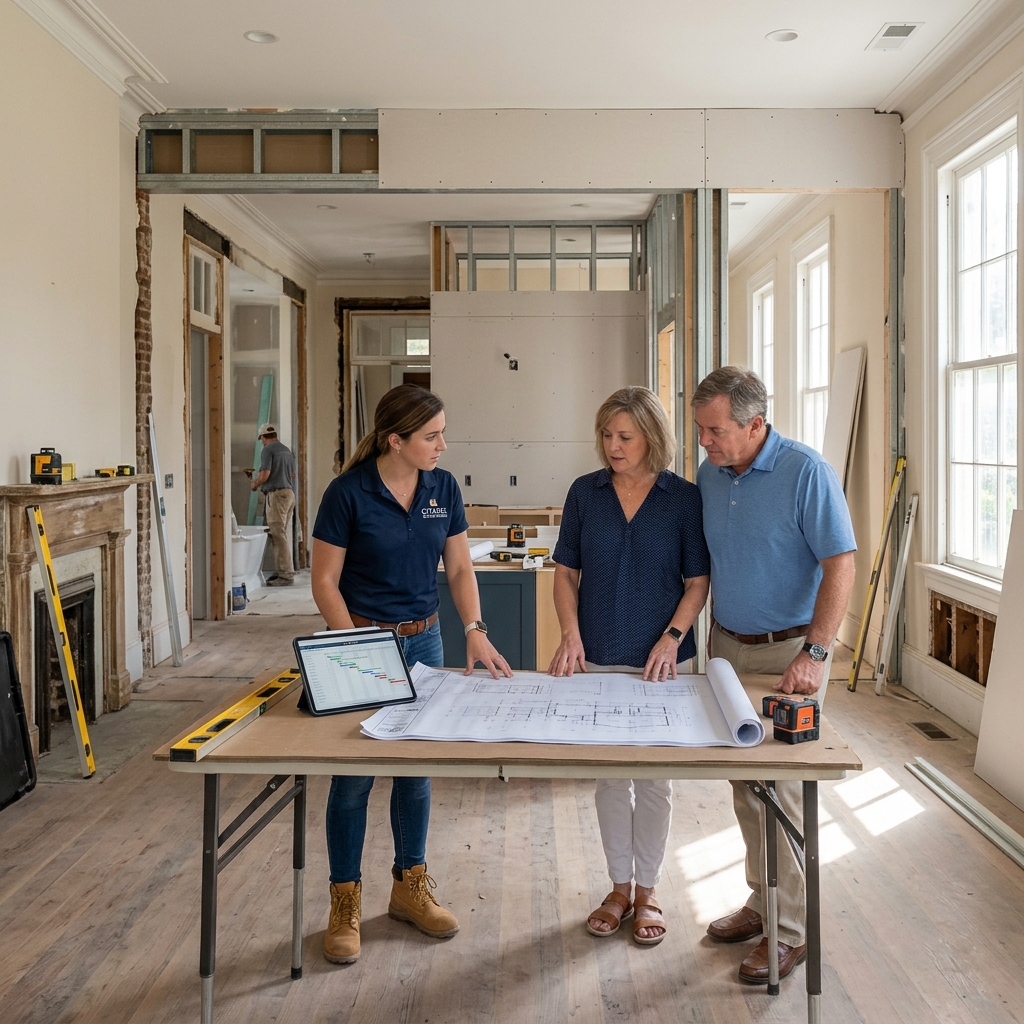
This creates natural accountability and eliminates the communication gaps that plague traditional projects.
Here’s how it works in practice: When our design team proposes opening up your kitchen and dining area, they’re already thinking about how our construction team will execute it. They understand our sequencing options, our material sourcing, our local supplier relationships. They know exactly how much that structural beam will cost and whether a smaller span might work equally well for 30% less money.
You get honest design conversations instead of finger-pointing. If a design choice creates construction complexity, we tell you immediately and offer alternatives. If we can value-engineer a solution that costs less and performs better, we suggest it without waiting for value engineering meetings.
The design-build model also means we manage your budget as a whole, not as separate consultant fees plus contractor markup. You’re paying for our expertise once, not multiple times through different vendors.
For your Charleston or Mount Pleasant home, this approach means faster decision-making, clearer cost visibility, and fewer surprises down the line.
Your action: Interview design-build firms about their design team’s construction experience. Ask how many of their architects have supervised construction projects. The answer reveals whether they truly integrate design and build or just use the term for marketing.
Three-Step Project Planning That Protects Your Investment
Our planning process is straightforward because complexity comes later—when we understand your vision fully.
Step One: Vision and Discovery. We spend considerable time understanding what you actually want, not just what you think you should want. We ask about your daily routines, your frustrations with current spaces, your aesthetic preferences, and your family’s needs five years from now. We tour your home to assess existing conditions, structural limitations, and opportunities you might not see. We discuss budget ranges and timeline expectations. Most importantly, we establish that we understand your priorities.
This step isn’t rushed. It often takes 2-3 weeks of conversations and site analysis before we move forward. Homeowners sometimes feel impatient here, but this is precisely where poor projects get derailed. Ambiguous starting points lead to mid-project surprises.
Step Two: Design Development and Detailed Planning. Armed with complete understanding, our design team creates your renovation vision in detailed drawings, 3D renderings, and specifications. You see exactly what your new kitchen will look like, how the addition connects to your existing home, where every outlet and light fixture lands. We price out every element so you know exactly what drives cost.
This stage often takes 6-8 weeks. We refine designs based on your feedback, explore options within your budget, and solve problems before construction starts. This is when we identify structural constraints, existing system limitations, and design opportunities you hadn’t considered.
Step Three: Construction Management and Coordination. Once you approve the design and budget, we take full responsibility for execution. We manage the schedule, coordinate all trades, source materials, track quality, and keep you informed regularly. Changes during construction happen only through formal change orders that specify scope, timeline, and cost impacts.
This three-step approach removes the common dysfunction where planning is skipped, designs are rushed, and construction is chaotic. You get a predictable, manageable process.
Your action: Ask potential contractors whether they follow a documented planning process with defined deliverables at each stage. A clear process is how they prevent projects from spinning into unexpected territory.
Kitchen and Bathroom Renovations Within Your Complete Vision
When kitchen or bathroom renovations happen as part of a whole-house project, they’re infinitely more effective than standalone updates.
Consider a kitchen renovation within a whole-house context: We’re not just updating cabinets and countertops. We’re rethinking the kitchen’s relationship to your dining room, family room, and entry flow. We’re assessing whether the existing layout serves your cooking habits or whether moving the sink or range would improve workflow. We’re evaluating how the kitchen connects visually and functionally to adjacent spaces.
The result feels intentional, not merely updated. Your new kitchen belongs in your home because we designed it within the context of your entire living pattern.
The same logic applies to bathrooms. A master bath renovation might include reconfiguring the bedroom closet. A guest bath update might tie into a hallway layout change. A second-floor bathroom addition becomes part of a larger upstairs reconfiguration.
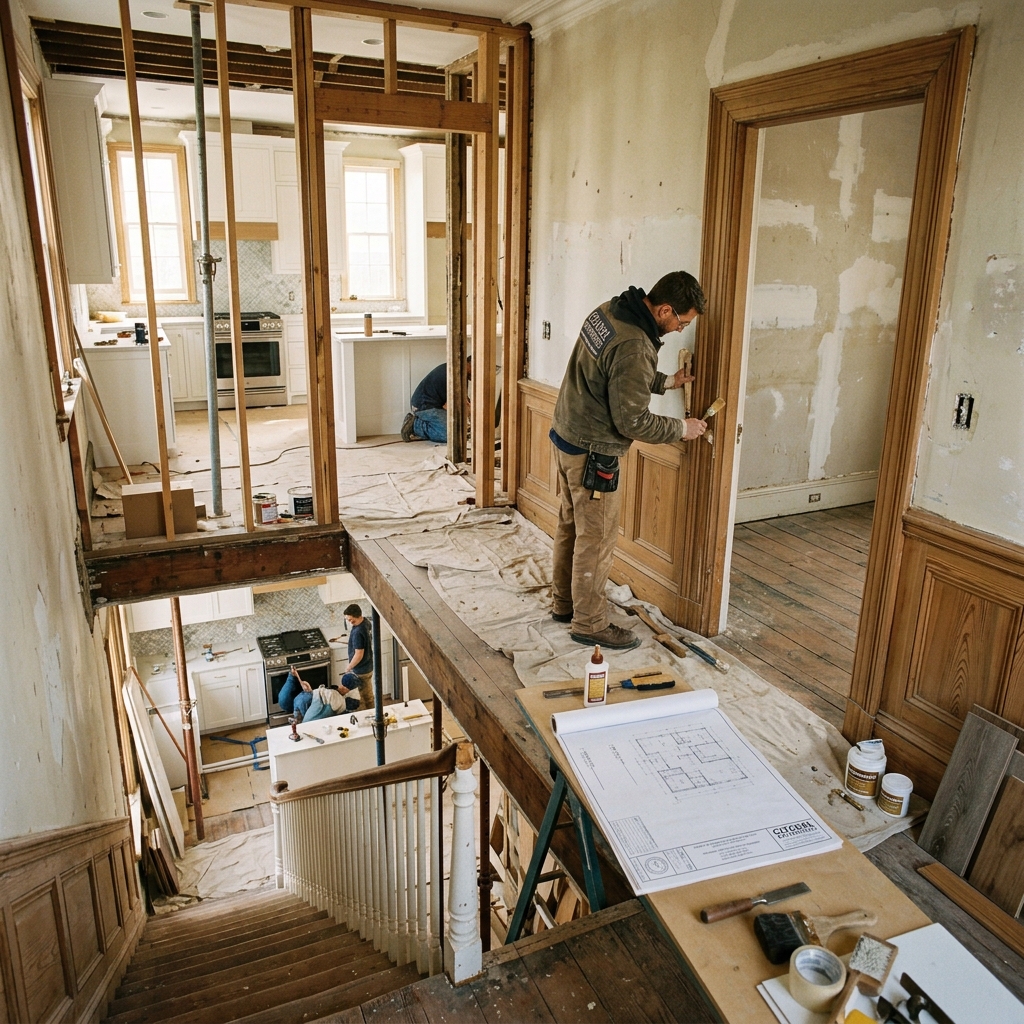
Our bathroom and kitchen expertise ensures that these spaces function beautifully and efficiently within the larger whole-house plan. We select materials that coordinate with your overall aesthetic. We plan plumbing and electrical routing that serves the whole-house systems. We ensure that finishes and design language feel cohesive throughout your home.
Your action: When planning bathroom or kitchen updates, consider whether they’re addressing isolated frustrations or whether they’re part of a bigger-picture renovation. A whole-house approach often delivers better value for the same investment.
Historic Home Restoration: Preserving Character and Integrity
Charleston’s architectural legacy is one of its greatest assets. Many of our Mount Pleasant and Charleston clients own historic homes that deserve restoration, not demolition and replacement.
Historic home restoration is a specialized skill. It requires understanding original construction methods, sourcing historically appropriate materials, and making decisions that honor the home’s original intent while accommodating modern living needs. Do you restore the original plaster ceiling, or do you work around it for updated HVAC? Do you replicate the original window style, or do you upgrade to modern thermally efficient versions? Do you match the original flooring or select something that complements it?
These aren’t simple choices, and they’re not the same for every homeowner.
We’ve spent decades restoring historic properties throughout the Charleston area. We understand local architectural styles, original building techniques, and how to work with preservation restrictions that many historic homes carry. We have relationships with specialized craftspeople who can replicate original details, source salvaged materials, and handle finishes that only come from understanding period-appropriate techniques.
When you choose us for historic home restoration, you get a team that respects the home’s history while creating spaces that function for contemporary life. We don’t erase character for the sake of convenience. We also don’t make your historic home feel like a museum when you need to actually live in it.
Your action: If you own a historic Charleston property, verify that any contractor you interview has completed multiple restorations in your area. Ask about their relationships with local preservation resources and craftspeople. Historic work requires more than general contracting skills.
How Our 30+ Years of Local Experience Guides Every Project
Thirty years in Mount Pleasant and Charleston means we’ve seen every possible condition a home renovation might encounter. More importantly, it means we have deep relationships with local suppliers, trades, inspectors, and preservation specialists.
When we source materials for your kitchen, we know exactly which local suppliers have the inventory, the quality standards, and the pricing that makes sense for your project. We don’t spend weeks researching or comparing options; we know the landscape. When we need a specialized electrician for a historic home, we call someone we’ve worked with for two decades who understands the unique requirements.
Local experience also means we understand Mount Pleasant and Charleston building codes, zoning restrictions, and HOA requirements at a level that national franchises simply don’t possess. We know which inspectors prioritize what. We know which permits can be processed in days versus weeks. We know which design choices will navigate approval easily versus those that create unnecessary friction.
Our long tenure means we’ve also built reputation capital. Our work is visible throughout the community. Homeowners you know have probably worked with us. That matters because your renovation becomes part of the local landscape.
Your action: Request references from homeowners in your specific neighborhood. Ask them about their contractor’s understanding of local conditions, code requirements, and community standards. Local expertise accelerates projects and prevents avoidable delays.
From Concept to Completion: Our Managed Process
Your whole-house renovation journey with us follows a predictable structure, even as specific details vary for your unique project.
We begin where we’ve already discussed: vision and discovery conversations, site assessment, and establishing clear parameters. Once you’ve approved a design and budget, we transition to pre-construction preparation. This includes finalizing all material selections, establishing the construction schedule with specific start and end dates for each phase, securing all necessary permits, and preparing your home for the disruption ahead.
During construction, you have consistent communication. We provide regular updates, typically weekly during active phases. You can visit the site during designated times. Major decisions or issues come to you immediately with context and options, not after they’ve already been made.
Quality control is built into every stage. We inspect work as it’s completed. We don’t wait until drywall is up to assess framing quality. We verify plumbing pressure before walls close. These proactive checks prevent discovering problems after they’re expensive to fix.

The final phase includes punch-list walk-throughs where you and we document any incomplete items or minor touches needed. We address these promptly, then conduct a final inspection together. You receive all warrantied items and documentation, and we transition to the ongoing maintenance relationship we’ve discussed with you from the beginning.
Your action: Ask any contractor how they communicate during construction and how they handle change requests. A clear, documented change management process prevents scope creep and budget surprises.
Whole-House Additions Done Right the First Time
When you’re adding square footage to your home, you’re not just building new space. You’re extending your home’s systems, aesthetic, and functionality.
A poorly executed addition feels like a different house tacked onto your home. It has different ceiling heights, different flooring transitions, different lighting quality. The connection between old and new is physically jarring. Worse, the addition might function awkwardly because it wasn’t integrated with your existing home’s systems and flows.
We approach additions as extensions of your home, not appendages. This starts with understanding how the new space will connect to existing spaces. Where does traffic naturally flow? How do you want the addition to feel in relation to the rest of your home? What materials and finishes will make it feel like a cohesive part of your house rather than an obvious addition?
It continues with careful system integration. Your HVAC system needs to deliver conditioned air to the addition as if it were always part of the home. Electrical panels and wiring must accommodate the new loads without creating an obvious patch job. Structural connections must be sound and invisible.
Aesthetically, we match existing architectural details, roofline angles, siding materials, and design language. Your addition should look intentional, not improvised. Someone visiting your home shouldn’t think, “Oh, they added this later.” They should think, “This is a well-designed home.”
Your action: Request photos of additions that contractors have completed on homes similar to yours. Assess whether the additions look integrated or added-on. That visual assessment tells you a lot about their design and execution philosophy.
Ongoing Property Maintenance Keeps Your Investment Protected
Your whole-house renovation is the largest investment you’re likely to make in your home. Protecting that investment requires consistent maintenance once the project is complete.
We offer ongoing property maintenance services because we understand your home better than anyone else. We’ve seen how it was built, what materials were used, and what systems need attention. We know when your HVAC system will likely need service. We can assess whether that crack in the foundation is cosmetic or concerning. We can address small issues before they become expensive problems.
Ongoing maintenance also ensures that warranties remain valid. Many material and system warranties require professional maintenance. By maintaining your home with us, you preserve coverage that protects your investment.
More fundamentally, routine maintenance extends the life of every system in your renovated home. Your new kitchen’s cabinetry and finishes last longer with proper care. Your addition’s roof lasts decades longer when it receives regular inspections. Your HVAC system operates more efficiently when it’s serviced annually.
We recommend scheduling annual inspections, seasonal system checks, and targeted maintenance based on your home’s specific systems and age. It’s a modest investment that prevents thousands in unexpected repairs.
Your action: Ask potential contractors whether they offer ongoing maintenance relationships. A contractor who wants to stay connected to your home after project completion is someone who stands behind their work.
Your Charleston Home Deserves a Partner You Can Trust
Your whole-house renovation is a significant undertaking. It requires a partner who understands your vision, manages complexity without making it your problem, delivers on commitments, and remains invested in your home’s long-term success.
We’ve built Citadel Enterprises on exactly those principles. We’re a family-owned firm that approaches your home with the same care we’d give our own. We’re not chasing volume; we’re building lasting relationships with homeowners who value quality, integrity, and professional project management.
When you’re ready to begin your whole-house renovation in Charleston or Mount Pleasant, we’d welcome the opportunity to discuss your vision. Reach out to schedule an initial consultation where we can assess your project, answer your questions, and determine whether we’re the right partner for your renovation.
Your home’s potential is waiting. Let’s build it together.