
Nationally, the average kitchen remodel rings in around $26,962, but let’s be honest—that number is just a starting point. Here in the Lowcountry, a simple refresh might cost as little as $10,000, while a full-scale, custom transformation in a historic Charleston home could easily sail past $100,000.
Your Guide To Kitchen Remodel Costs In The Lowcountry
Embarking on a kitchen remodel is a lot like planning a big trip. Your budget is your map, your vision is the destination, and an experienced local builder is the guide who knows all the local routes and potential roadblocks. Before you pack your bags, you need a realistic sense of what things cost and why.
This guide is designed to be that clear, straightforward map for homeowners in Charleston, Mount Pleasant, and the surrounding communities. We'll break down the real costs you can expect, so you can plan your project with confidence.
Understanding The Remodel Tiers
Not all kitchen projects are the same, and the final price tag really comes down to the scope of work. It’s helpful to think about remodels in three general categories to get a feel for where your own project might land.
Let's start with a baseline. National data shows most homeowners spend between $14,585 and $41,534 on their kitchen, with the average hovering around $26,962. These are useful reference points, but our local market, materials, and the specifics of your home will truly shape your final budget.
Here’s a practical breakdown of what those numbers mean:
- Minor Refresh ($10,000 – $25,000): This is all about cosmetic upgrades. We're talking about painting your existing cabinets, swapping out the hardware, putting in a new backsplash, and maybe replacing a faucet or some light fixtures. The core layout and major elements stay put.
- Mid-Range Remodel ($30,000 – $70,000): This is the sweet spot for most projects. It usually means all-new cabinets and countertops, a fresh set of appliances, updated flooring, and perhaps some small tweaks to the existing layout for better flow.
- High-End or Luxury Overhaul ($80,000+): Think of this as a complete gut renovation. This level of investment often covers reconfiguring the entire space, which could mean moving walls, rerouting plumbing and electrical, and bringing in high-end finishes like custom cabinetry, professional-grade appliances, and premium natural stone.
To give you a quick snapshot, here’s how these tiers generally look for a Charleston-area project.
Kitchen Remodel Cost At A Glance Charleston SC
| Remodel Tier | Typical Cost Range | Best For |
|---|---|---|
| Basic Refresh | $15,000 – $30,000 | Homeowners looking for a quick, high-impact cosmetic update without changing the kitchen's footprint. |
| Mid-Range Remodel | $35,000 – $75,000 | A full-scale update with new cabinets, appliances, and countertops, often within the existing layout. |
| Luxury / Custom | $80,000 – $150,000+ | A complete transformation involving layout changes, structural work, and high-end, custom materials. |
This table provides a solid starting point, but remember that every home—and every homeowner's vision—is unique.
A common challenge, especially in downtown Charleston, involves adapting modern kitchen designs to the unique constraints of older structures. This is where professional expertise in historic home renovations becomes invaluable.
Charting Your Course
Before you get too deep into the numbers, it’s a great idea to explore the key elements of a dreamy kitchen renovation. Getting a feel for all the possibilities helps you decide what’s truly important for your new space.
Your journey starts by defining what you really want and need. That vision will be the compass that guides every single financial decision you make along the way.
How Your Remodel Budget Is Actually Spent
Knowing the total cost of a kitchen remodel is one thing, but understanding where that money actually goes is what gives you control. Think of your budget less like a single number and more like a pie. Each slice—cabinets, countertops, labor—represents a different part of the project.
Some slices are always going to be bigger than others, and that’s normal. When you see how the whole pie is divided, you can make smarter decisions about where to invest for the biggest impact and where you might be able to find some savings.
This visual gives a great overview of the cost tiers, from a simple refresh to a full-blown, high-end transformation.
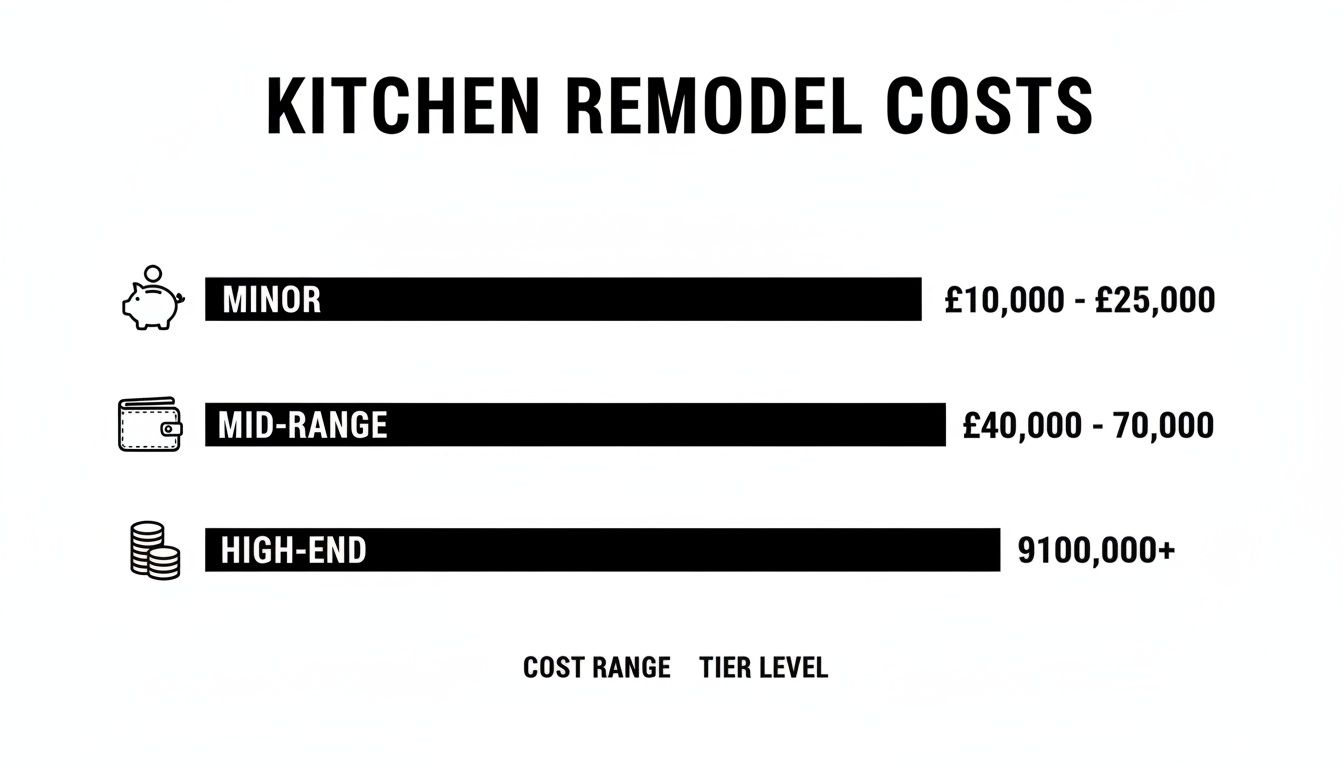
As you can see, the investment grows quickly as you move from cosmetic updates to major structural changes. Getting a handle on these ranges is the first step toward creating a realistic financial plan that matches your vision.
Unpacking The Major Cost Categories
So, what are the biggest slices of that budget pie? While every project is different, the way costs are distributed is surprisingly consistent. It’s the things you see and touch every day that usually command the largest share of the investment.
Cabinets are much more than just storage; they’re the backbone of your kitchen's entire look and feel. Because of this, they are almost always the single biggest line item. After cabinets, the next major expenses are typically the skilled labor to bring it all together, followed by your appliances and countertops.
A well-planned budget isn’t about spending less—it's about spending smart. By understanding the typical percentage breakdown, you can allocate your funds more effectively, ensuring every dollar contributes to a kitchen that is both beautiful and highly functional for years to come.
Knowing where your money is likely to go helps you anticipate costs and avoid sticker shock later on. It gives you a solid foundation for discussing your priorities with your design-build team. For more on this, we've put together a guide on https://citadelenterprises.com/blog/how-to-budget-for-home-renovation/.
Typical Kitchen Remodel Cost Breakdown By Percentage
Let's translate this into real-world numbers. The table below illustrates how a typical mid-range kitchen remodel budget is allocated. This gives you a clear sense of where your investment goes.
| Expense Category | Percentage of Total Budget | Example Cost (on a $75,000 Project) |
|---|---|---|
| Cabinetry & Hardware | ~30% | $22,500 |
| Labor & Installation | ~20% | $15,000 |
| Appliances | ~15% | $11,250 |
| Countertops | ~10% | $7,500 |
| Flooring | ~7% | $5,250 |
| Lighting & Electrical | ~5% | $3,750 |
| Plumbing & Fixtures | ~5% | $3,750 |
| Backsplash & Finishes | ~3% | $2,250 |
| Permits & Design Fees | ~5% | $3,750 |
This kind of breakdown makes it obvious why your material choices matter so much. For example, the countertop material you choose can make that 10% figure swing up or down pretty dramatically. To see how one decision impacts the budget, you can find great information on engineered stone countertops cost.
This table really provides a roadmap, showing how a comprehensive budget is carefully divided. At Citadel Enterprises, our design-build process is all about working with you to balance these categories, making sure your investment aligns perfectly with your priorities right from the start.
The True Value Of Professional Craftsmanship
A beautiful design is just the starting point. The real magic happens when skilled hands bring that vision to life. While we all love looking at gorgeous cabinets and countertops, it’s the professional labor—the craftsmanship—that truly powers your kitchen remodel. This is one part of the budget where you absolutely don’t want to cut corners.
Think of it this way: your remodel is like an orchestra. You have the plumbers, electricians, and carpenters all playing their specific parts. The general contractor is the conductor, making sure everyone works in harmony and follows the same sheet music. Without that leadership, you end up with chaos, costly mistakes, and a final product that’s completely out of tune.
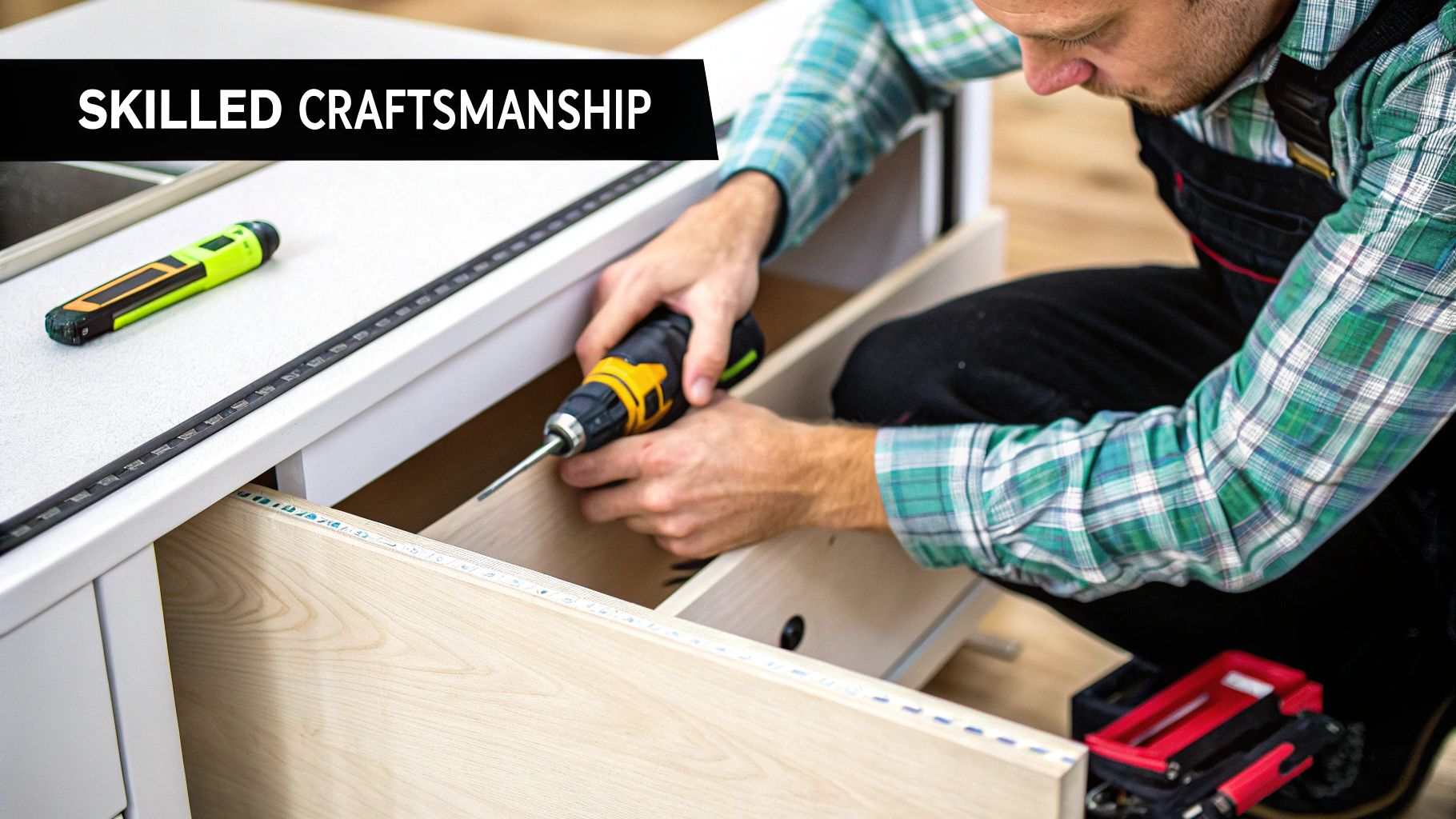
Investing in professional labor isn't just another line item on a spreadsheet; it's an insurance policy for your project. It’s the guarantee that every cut is precise, every wire is safely installed, and every plumbing connection is solid.
The Team Behind The Transformation
A successful kitchen remodel relies on a team of specialized pros, each a master of their trade. When you work with a design-build firm like Citadel Enterprises, you get a cohesive team that has worked together for years. This completely sidesteps the headache and risk of trying to hire and manage a dozen different subcontractors on your own.
Here are the key players you need on your side:
- General Contractor: This is your project leader. They oversee the entire renovation, manage the schedule, coordinate all the trades, and ensure top-notch quality from day one until the final walkthrough.
- Plumbers: Absolutely essential for hooking up your sink, faucet, dishwasher, and ice maker. Their expertise becomes even more critical if you're moving appliances or adding a feature like a pot filler.
- Electricians: They handle everything from wiring new outlets for your kitchen island to installing a complex layered lighting design, all while making sure the work is up to code and, most importantly, safe.
- Carpenters: These are the skilled artisans who install your cabinetry, create custom built-ins, and perfect the trim work. Their attention to detail makes all the difference.
- Tile Setters & Flooring Installers: These specialists lay the foundation for your kitchen’s entire look and feel, whether it's an intricate backsplash or a durable new floor.
Every single one of these professionals has a crucial role to play. Trying to coordinate this complex dance yourself often leads to frustrating delays, miscommunication, and expensive rework. The value of having a unified, experienced team simply can't be overstated.
"Managing individual subcontractors yourself can feel like a part-time job you never signed up for. A coordinated design-build team removes that burden, providing a single point of accountability and ensuring a seamless flow from one construction phase to the next."
This integrated approach is one of the main benefits of hiring a design-build contractor. In the long run, it saves you time, stress, and money, turning a potentially chaotic process into a predictable and enjoyable experience.
Why Quality Labor Is A Smart Investment
Labor isn’t cheap, and for good reason—it’s the skill that makes or breaks the entire project. Typically, you can expect labor to account for 15-25% of your total budget. On a $70,000 project, that translates to $10,500 to $17,500. This holds true here in coastal South Carolina, where we’re often dealing with strict historic codes and building for hurricane-readiness.
The work of licensed plumbers, electricians, and carpenters really drives this number. If you’re changing your kitchen’s layout or adding a big feature like an island, expect labor costs to climb another 20-30%.
In the Charleston area, however, that investment pays dividends. Experienced local professionals bring specialized knowledge that’s invaluable:
- Historic Home Nuances: They know how to handle the unique challenges of older homes, from original plaster walls to quirky, century-old plumbing.
- Coastal Building Codes: They are experts in the specific regulations designed to protect your home from humidity, salt air, and severe weather.
- Permitting Processes: A seasoned local team understands how to efficiently navigate the permitting offices in Mount Pleasant, Charleston, and the surrounding islands.
Ultimately, paying for professional craftsmanship is paying for peace of mind. It’s the assurance that your kitchen won't just look stunning when it's finished, but will also be safe, functional, and built to last for decades.
What's Hiding Behind the Walls? The Real Drivers of Remodel Costs
Ever wonder why two kitchens that look almost the same can have wildly different price tags? The answer usually isn't about the fancy cabinets or the quartz countertops. It's the "unseen" work—the stuff behind the drywall and under the floors—that often makes the biggest difference in the final cost.
Think of it this way: buying a car has a sticker price, but the real cost comes out when you start adding the premium sound system, leather seats, and advanced safety features. A kitchen remodel is no different. What you can't see often adds just as much to the budget as the beautiful finishes you can.
It All Starts with Scope and Layout
By far, the biggest factor that will shape your budget is the project's scope. Are you just swapping out the old for the new in the same spots, or are you tearing down walls and completely re-imagining the space? A cosmetic refresh is one thing; a full-gut renovation that reconfigures the layout is a whole different ballgame.
When you start moving things around, you're signing up for a lot more than just new cabinets. It creates a domino effect of professional trades.
- Moving a Wall: Sounds simple, right? But if that wall is holding up your second story, you'll need a structural engineer to figure out how to support the load properly. That means design fees and a whole lot more labor.
- Relocating Plumbing: Shifting the sink across the room isn't just a quick hookup. It means a licensed plumber has to open up walls or floors to reroute water and drain lines, which is a far more involved (and expensive) job.
- Adding an Island: A dream for many, but a functional island often needs new electrical wiring for outlets and dedicated plumbing for a prep sink. Suddenly, you've added an electrician and a plumber to the team.
Every one of these changes adds layers of complexity, more materials, and specialized labor. A straightforward cabinet swap might not stray far from the material budget, but a full reconfiguration can easily add 20-30% or more to the final bill.
The Surprises Lurking in Older Charleston Homes
Here in the Lowcountry, our older and historic homes are packed with character—and often, a few surprises. You never truly know what’s behind the walls until demolition begins, and what we find can have a major impact on the budget.
These discoveries aren't just little hiccups. They are often serious issues that absolutely have to be fixed to make your home safe and ensure your beautiful new kitchen is built on a solid foundation.
We've seen it all:
- Outdated knob-and-tube wiring that requires a full electrical system upgrade to be safe.
- Rotted subflooring from a tiny, decades-old leak that now needs structural repair.
- Old plumbing that doesn't come close to meeting modern building codes.
- Termite or water damage that has been silently eating away at the home's framing.
This is exactly why a contingency fund isn't just a nice-to-have; it's a must-have for any serious renovation.
Think of a contingency fund—typically 15-20% of your total project cost—as your project's insurance policy. It's the safety net that keeps a surprise discovery from derailing your entire remodel, ensuring you can handle it properly without cutting corners on your vision.
Navigating Charleston-Specific Challenges
Remodeling in the Charleston area comes with its own unique playbook. Our coastal climate and treasured historic architecture demand a specialized approach, materials, and expertise that can influence project costs.
For starters, the constant high humidity means we have to be smart about using moisture-resistant materials and planning for proper ventilation to head off issues like mold or warping. On top of that, working in any of Charleston's historic districts means navigating strict preservation guidelines. This can dictate everything from window styles to siding materials, adding another layer of complexity and cost. These are the kinds of local nuances that make working with an experienced Lowcountry builder so valuable.
Smart Ways To Maximize Your Kitchen Investment
Getting a handle on the cost of a kitchen remodel is just the starting point. The real win is turning that expense into a smart investment that pays you back in both daily enjoyment and long-term home value. A great project isn’t measured by the final invoice, but by making strategic choices that deliver the kitchen you need while boosting your home’s appeal.
Think of it like planting a tree. You put in the effort and money upfront, but it gives you shade right away and becomes a more valuable part of your property year after year. Your kitchen remodel should work the same way.
Prioritize Impact Over Trends
To get the most bang for your buck, put your money where it counts—on the elements that make the biggest functional and visual difference. It's tempting to chase the latest design trends, but today's "in" look can feel dated in just five years. A smarter move is to invest in a timeless foundation that you can easily refresh with smaller, less expensive updates later on.
We often guide clients through a "high-low" approach. It's all about knowing where to splurge and where to save.
- Splurge Here: High-quality cabinetry, durable countertops, and dependable appliances are the workhorses of your kitchen. These are the last things you want to replace, so investing here pays off.
- Save Here: Things like light fixtures, cabinet hardware, and even the backsplash are much easier and cheaper to swap out. A simple hardware change in a few years can give the whole room a fresh new feel without breaking the bank.
This strategy ensures your main investment goes into the parts of the kitchen built to last.
Make Smart Material And Cabinet Choices
Your material selections and cabinet decisions are two of the biggest levers you can pull to manage your budget without giving up on that high-end look you’re after.
Reface or Replace?
If your current kitchen layout works well and the cabinet boxes are in good shape, refacing is a fantastic way to save money. We find it can cost 30-50% less than a full replacement. Refacing keeps the cabinet boxes and simply gives them new doors, drawer fronts, and a matching veneer—a total facelift.
On the other hand, if the layout is clunky or the cabinets are falling apart, a full replacement is the better long-term choice. This opens up the door to improve workflow, add modern storage, and truly transform the space.
Cost-Effective Material Swaps
You can absolutely get a luxury look without the luxury price tag. Many modern materials are designed to mimic their pricier counterparts beautifully.
- Countertops: Everyone loves the look of marble, but it's porous and high-maintenance. For a similar aesthetic with far better durability, consider quartz. It’s tough, stain-resistant, and requires practically zero upkeep.
- Flooring: Luxury Vinyl Tile (LVT) has come a long way from the old sheet vinyl. Today’s LVT can convincingly replicate the look of natural hardwood or stone for a fraction of the cost, and it’s waterproof and incredibly durable.
A well-designed kitchen balances beauty with practicality. The smartest investments are in durable, functional materials that fit your lifestyle and stand the test of time, giving you a space you’ll love for decades.
Plan Purchases Strategically
Finally, a little bit of planning around when you buy can lead to significant savings, especially on appliances. These big-ticket items are almost always on sale around major holidays.
- Holiday Sales Events: Keep an eye out for deals during Presidents' Day, Memorial Day, the Fourth of July, and of course, Black Friday.
- Floor Models: Don't be afraid to ask about floor models! Stores often sell these display units at a steep discount for tiny, purely cosmetic dings that you’d never even notice.
Timing your project to line up with these sales can easily save you hundreds, if not thousands, of dollars. By combining these strategies, you can take control of your kitchen remodel cost and ensure every dollar you spend is a wise investment in your home.
Let's Get Started on Your Charleston Kitchen Remodel
So, where do we go from here? You've seen the numbers, from average costs in the Charleston area to the specific line items that make up a budget. We’ve peeled back the layers on what drives costs, looked at the unique challenges of our older homes, and even found some smart ways to invest your money.
You now have a solid framework for understanding the financial side of a remodel. But remember, the numbers are just one piece of the puzzle. The other, arguably more important piece, is finding the right partner to bring it all together. A great remodel isn't just about picking out pretty finishes; it’s about a smooth, transparent process that turns your vision into a real, functional space—without the headaches.
From Budget Questions To A Concrete Plan
This is where a design-build team like Citadel Enterprises really makes a difference. We take what can feel like an overwhelming guessing game and turn it into a clear, focused planning session. With decades of local experience, we know how to handle the specific quirks of Charleston’s historic homes and coastal building codes, ensuring there are no surprises down the line.
Your home is your biggest asset, but a kitchen remodel is an investment in your life. The real goal is to create a space that doesn’t just look great, but fundamentally improves how your family lives, works, and gathers for years to come.
Instead of getting bogged down in spreadsheets, you get a dedicated partner managing every last detail. Our job is to help you find that perfect balance between your dream kitchen and your real-world budget, creating a space that feels like you without breaking the bank.
Ready to stop wondering and start planning? The only way to know what your project will truly cost is to talk it through. Let's sit down, look at your ideas, and build a realistic plan for the beautiful, functional Lowcountry kitchen you’ve always wanted.
Schedule your initial consultation with the Citadel Enterprises team today and take the first confident step toward your new kitchen.
Your Kitchen Remodel Questions, Answered
Thinking through the budget for a kitchen remodel always brings up a lot of questions. We get it. To help you plan with a bit more confidence, we've put together answers to the questions we hear most often from homeowners here in the Charleston area.
How Long Does a Typical Charleston Kitchen Remodel Take?
The honest answer? It really depends on the scope of the project. A simple, cosmetic refresh—think new paint, backsplash, and hardware—can be wrapped up in as little as 2-4 weeks.
But if you're planning a more substantial mid-range remodel with new semi-custom cabinets and countertops, you should plan for a timeline of around 6-10 weeks. For a complete gut renovation that involves moving walls, re-routing plumbing, or extensive custom work, the project could take 3-5 months or even longer, especially if we're working within the guidelines of a historic district. Our job in the planning phase is to map all this out and give you a realistic schedule from day one.
Do I Really Need a Permit for My Kitchen Remodel?
For most kitchen projects, yes, a permit is required. If your remodel involves touching any plumbing, electrical, or structural elements, you'll need a permit from your local municipality—whether you're in downtown Charleston, Mount Pleasant, or out on one of the islands.
This isn't just a box-ticking exercise; it’s about safety. Permits ensure every part of the job is done to code, protecting your family and your home. As your design-build partner, we take care of the entire permitting process for you, from submitting the architectural plans to coordinating every final inspection.
What’s the Return on Investment for a Kitchen Remodel?
A thoughtfully designed kitchen remodel is consistently one of the best investments you can make in your home. It’s one of the few projects that adds significant financial value while also making your daily life better.
In a sought-after market like Charleston, homeowners can typically expect to see a return of 50% to 70% of their investment when they sell their home. A stunning, functional kitchen is a massive draw for potential buyers and can seriously boost your home's appeal and final sale price.
We always focus on classic designs and high-quality, durable materials. This approach ensures the kitchen we build for you not only feels great today but continues to add value for years to come.
Is It Cheaper to Reface or Replace Kitchen Cabinets?
Refacing your cabinets is definitely the more budget-friendly option, usually costing 30-50% less than a full replacement. It’s a fantastic solution if your kitchen layout works well and your cabinet boxes are still in good, sturdy shape.
Refacing involves replacing the doors and drawer fronts and then applying a new veneer to the visible exterior of the cabinet boxes. However, if you’re looking to change the footprint of your kitchen, add more functional storage, or if your current cabinets are just worn out, a full replacement is the smarter long-term move. We can walk you through the pros and cons and help you decide which path makes the most sense for your project.
Ready to move from general questions to a specific plan for your home? The Citadel Enterprises team is here to provide a clear, site-specific estimate for your kitchen remodel. Contact us today to schedule your consultation.