
Bringing a historic Charleston home back to life is a special kind of journey. It's more than just a renovation; it’s about becoming a steward of a piece of Lowcountry history. This path requires a very specific kind of partner—a team of historic home renovators who live and breathe the delicate art of blending past and present.
Embracing the Historic Renovation Mindset
Taking on a historic renovation is a world away from your typical remodel. It calls for a different frame of mind, one built on patience, flexibility, and a genuine love for the story your home is waiting to tell.
The mission isn't to just rip out the old and bring in the new. Instead, you're looking to carefully repair, lovingly restore, and thoughtfully integrate modern elements in a way that honors the original craftsmanship. Think of it less as demolition and more as a careful, respectful deconstruction.
You’re not just a homeowner; you're the current caretaker of a property with a story to tell. Your choices will echo for generations. This often means letting the house itself guide the project.
There's a certain magic in peeling back layers of old linoleum to find original heart pine floors, or discovering hand-hewn beams hidden behind modern drywall. A truly great renovation doesn't hide these discoveries—it puts them on full display.
Balancing Preservation with Modern Living
The biggest puzzle for any owner of a historic home is how to weave modern life into a centuries-old structure. You need a home that feels authentic to its roots but also gives you a functional kitchen, comfortable bathrooms, and systems that actually work.
This is where a seasoned expert really proves their worth. They help you find the answers to tricky questions:
Can we restore the original single-pane windows to be more energy-efficient, or do we have to replace them?
How do we add modern lighting without destroying the delicate, original plaster medallions on the ceiling?
Where can we discreetly run new HVAC and electrical lines without tearing into irreplaceable millwork?
It's all about finding that perfect harmony. You want to enjoy the comforts of today without erasing the soul of the home. The goal is a seamless blend, where the new feels like it has always belonged.
Why Specialized Renovators Are Crucial
Any general contractor can build a house, but historic home renovators bring a unique set of skills to the table, especially in a place like Charleston. They know how old-growth wood behaves over time, what goes into historic mortar, and the old-world techniques needed to replicate intricate details.
Their hands-on experience with Charleston's Board of Architectural Review (BAR) alone is worth its weight in gold, saving you from costly delays and frustrating design changes. They also have a trusted network of artisans—the kind of plasterers, woodworkers, and masons who are true masters of dying arts.
Ultimately, the success of a project, like this breathtaking Charleston Harbor retreat, depends on having that specialized expertise from day one.
Assessing Your Property and Navigating Preservation Rules
Before you even start a conversation with a renovator, the most critical work happens right inside your own walls. A clear-eyed, honest assessment of your home's condition, paired with a solid grasp of Charleston's specific preservation rules, is the bedrock of a successful project. Skipping this step is like trying to build a house without a foundation—it just won't work.
Your Initial Walk-Through: What to Look For
Start by walking your property with the eye of a historian and a detective. Take notes, take pictures, document everything. You're looking for two things: the gems and the red flags.
First, identify the character-defining features that make your house special. Is it the original heart pine floors with their centuries of patina? The wavy, imperfect glass in the windows? Maybe it's an intricate plaster medallion in the dining room or the hand-carved newel post that greets you at the stairs. These are the elements that tell your home's story, and you'll want to protect them fiercely.
At the same time, you have to be brutally honest about potential problems. Look for the subtle clues of moisture intrusion—peeling paint near windows, discolored wood along the foundation. Take note of any sagging floors or spiderweb cracks in the plaster, as these could hint at structural issues hiding beneath the surface. Unwrapping a historic home always comes with surprises; the more you can anticipate, the better you and your team can prepare.
This initial evaluation forces you to start making the tough calls that define any historic renovation. The decision tree below gives you a good look at this balancing act between preservation, modernization, and finding the right expertise for the job.
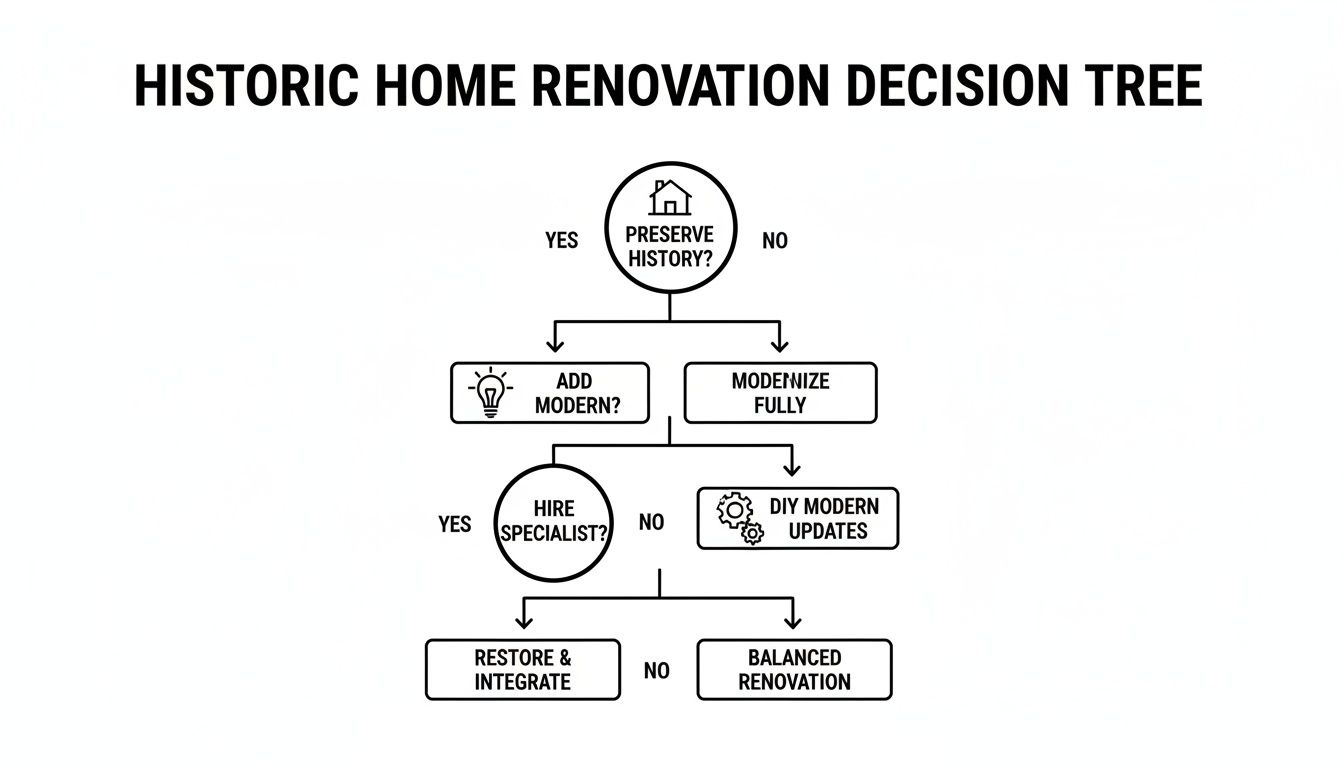
As you can see, every path—whether it's adding modern comforts or meticulously restoring original details—ultimately leads to the same conclusion: you need a specialized team.
Understanding Charleston's Preservation Framework
Here in Charleston, you're not just renovating a building; you're the temporary steward of a piece of the city's living history. This is where getting familiar with local ordinances, especially the guidelines from the Board of Architectural Review (BAR), is non-negotiable. The BAR's job is to make sure any changes made to historic properties honor their architectural integrity.
Not every single project needs a full BAR review, but a surprising number do. As a rule of thumb, any work that changes the exterior appearance of a home in a historic district will need their stamp of approval.
This often includes things like:
Changing exterior paint colors
Replacing windows or doors
Repairing or replacing a roof
Building an addition
Altering a piazza or historic ironwork
My Two Cents: Never assume a change is too "minor" for the BAR. I've seen projects get held up for months over something the homeowner thought was a simple repair. When in doubt, ask an expert before you do anything.
The Cheat Sheet: BAR Review vs. Standard Permits
To help you get a better handle on this, I've put together a quick reference guide. It's a common point of confusion, but understanding what typically requires BAR oversight versus what might just need a standard building permit can save you a world of headaches.
| Charleston Historic Renovation Project Cheat Sheet | ||
|---|---|---|
| Project Type | Likely BAR Review Required? | Key Considerations |
| Interior Painting & Refinishing Floors | No | As long as it doesn't impact original, significant interior features visible from the outside. |
| Kitchen or Bathroom Remodel (Interior only) | No | Standard building, plumbing, and electrical permits are still required. |
| Exterior Paint Color Change | Yes | The BAR has specific guidelines for appropriate color palettes in historic districts. |
| Window or Door Replacement | Yes, Absolutely | The BAR will want to see "in-kind" replacements that match the original material and style. |
| Roof Repair/Replacement | Yes | The material, color, and style of roofing are all under BAR jurisdiction. |
| Building an Addition or New Garage | Yes, Absolutely | This is a major alteration and will receive significant scrutiny from the BAR. |
| HVAC System Upgrade | Maybe | The interior work is fine, but the placement of exterior condenser units is subject to BAR review. |
This table is just a starting point, of course. Every property is unique, and the nuances matter.
Differentiating Permits From BAR Approval
It's critical to know that a building permit and BAR approval are two completely different things. A building permit ensures your project is safe and up to code. BAR approval is all about historical and aesthetic appropriateness. You'll very often need both.
This is exactly why working with historic home renovators who have deep roots and established relationships in Charleston is such a game-changer. They know the people, the process, and the unwritten rules. Their experience can help you navigate the often-confusing permitting process for home remodels and prevent costly delays.
This need for specialized knowledge isn't just a Charleston thing. Nationally, about 48% of owner-occupied homes were built before 1980, with a huge number dating back much further. This aging housing stock is fueling a boom in the remodeling industry as more people choose to restore these classic homes.
By taking the time to assess your property and learn the local rules of engagement, you shift from being just a homeowner to being an informed, prepared leader of your own project. This groundwork is what empowers you to ask the right questions, hire the right team, and confidently start the journey of bringing your piece of Charleston history back to life.
Finding and Vetting Qualified Historic Home Renovators
The success of your entire renovation hangs on one crucial decision: choosing the right team. This isn’t just about finding a contractor; it’s about finding a partner who speaks the unique language of old homes. Your search for true historic home renovators has to be more deliberate than just scanning online reviews.

So, where do you start? Begin by tapping into the local preservation community. Organizations like the Preservation Society of Charleston or Historic Charleston Foundation are goldmines of information and often keep lists of professionals whose work they know and trust.
Another great strategy is to just keep your eyes open. Take a drive through Charleston's historic districts and look for active renovation projects. When you see a company proudly displaying its sign on a clean, well-managed worksite, that tells you a lot about their professionalism before you even make a call.
Crafting Your Shortlist
Once you’ve gathered a few promising names, it's time to dig into their portfolios. Don't get distracted by pretty pictures—look for relevance. A fantastic contractor who builds stunning modern homes on Kiawah might not have the specialized skills needed to restore an antebellum single house downtown.
You're looking for proof they've successfully handled projects similar to yours. Zero in on:
Architectural Style: Have they worked on homes from a similar era, like Colonial, Federal, or Greek Revival?
Project Scope: Does their portfolio feature comprehensive restorations, not just bathroom and kitchen remodels?
Specific Challenges: Can you find evidence of them tackling complex structural repairs, delicate plaster restoration, or meticulous window salvaging?
This homework helps you weed out the generalists and focus on firms that can back up their claims with a portfolio of relevant, successful work.
The Interview and Vetting Process
With a shortlist in hand, the real work begins. The interview is your chance to get a feel for a renovator's true depth of knowledge, their communication style, and how they approach problems. A general contractor will talk about schedules and materials, but a historic specialist will want to discuss craftsmanship, authenticity, and their philosophy on preservation.
Come prepared with thoughtful questions that get to the heart of their experience with the kinds of challenges your specific project will present. You need to understand not just what they do, but how they think.
A key differentiator is their network. A great historic renovator won't just have subcontractors; they'll have a curated team of artisans—plasterers, woodworkers, and masons who are masters of their craft. Ask them who they work with; their answer speaks volumes about their commitment to quality.
For a project with so many interconnected parts, from design and permitting to sourcing materials, it’s also wise to understand the benefits of hiring a design-build contractor. This integrated approach, where one team manages both the design and construction, creates a single point of accountability that can be invaluable for complex historic restorations.
Critical Questions to Ask Potential Renovators
When you sit down to talk, be ready to go deep. The quality and specificity of their answers will tell you everything you need to know.
On Local Expertise:
How many projects have you completed under the Charleston BAR's jurisdiction in the last two years? Can you walk me through a recent BAR presentation?
Tell me about a time you found a major surprise—like termite damage or structural rot—after demolition began. How did you document it, present it to the homeowner, and solve it?
On Craftsmanship and Materials:
What's your process for sourcing period-appropriate materials, like reclaimed heart pine or old-growth cypress?
When it comes to original features like windows or plaster, what's your philosophy on "repair versus replace"? Can you give me a specific example from a past project?
On Project Management:
How do you keep clients in the loop, especially when it comes to budget updates or schedule changes?
Who will be my day-to-day contact, and how often should I expect to meet with them on-site?
You’re looking for confident, specific answers filled with real-world examples. Vague responses are a huge red flag. The right team will appreciate these detailed questions—they see it as a sign of an engaged, serious client. Investing time in this rigorous vetting process is the single most important thing you can do for your home’s future.
Setting a Realistic Budget for Your Historic Restoration
Let's be blunt: budgeting for a historic home renovation is a whole different ballgame than planning for a standard remodel. The numbers are bigger, the process is more complex, and the chances of uncovering a few surprises along the way are practically guaranteed. Getting your financial plan right from the very beginning is the single most important thing you can do to protect your investment and keep your project on track with your historic home renovators.
The first thing to wrap your head around is why the costs are so different. With new construction, every 2×4 and sheet of drywall is accounted for. A historic project, on the other hand, is full of unknowns. What's lurking behind that 120-year-old plaster? Is there water damage from a leak that happened decades ago? These aren't questions of "if," but rather "when" and "how much."
Understanding the Key Cost Drivers
Several unique factors will shape the budget for your historic property. Facing these realities head-on will help you set honest expectations and avoid the kind of sticker shock that can bring a project to a grinding halt.
The Unknowns: The most common culprit for a busted budget is finding extensive rot, termite damage, or failing structural components once demolition starts.
True Artisans: The specialized skills of master plasterers, masons, and woodworkers who practice historic methods are in high demand and come at a premium.
Authentic Materials: Sourcing reclaimed heart pine flooring or having moldings custom-milled to match the originals costs significantly more than grabbing materials from a big-box store.
This isn't happening in a vacuum. The entire home remodeling market has exploded, growing by a staggering 26.6% between 2021 and 2022 alone. With demand expected to stay high, that premium for skilled labor isn't going anywhere. You can dig into the numbers yourself in this in-depth industry report on remodeling statistics.
How to Build a Bulletproof Budget
A smart historic renovation budget is built on one thing: preparation. It's not just a list of expenses; it's a financial strategy designed to handle the unexpected. And the most vital part of that strategy is your contingency fund.
For a typical remodel, a 10% contingency fund might cut it. For a historic renovation, you need to be thinking closer to 15-20% of your total estimated construction cost. This isn't just "nice to have" money; it's a non-negotiable part of the budget, set aside specifically for the surprises you will uncover.
I always tell my clients to think of it as having two budgets. The first covers the known scope of work—your beautiful new kitchen, the restored piazza, the primary suite addition. The second, your contingency, is the budget for fixing the old house itself. Both are absolutely critical to a successful outcome.
The Financial Edge of a Design-Build Firm
One of the best ways to get a firm grip on your budget is by working with a design-build firm. When the team designing your project is the same one building it, you gain a massive advantage.
Having architects and builders in the same room from day one means you get a far more accurate cost estimate right out of the gate. The construction experts can give immediate feedback on the price of different design ideas, which stops you from getting too attached to a plan that your budget can't support. This collaborative approach dramatically reduces the risk of expensive changes mid-project, giving you a much clearer financial roadmap from start to finish.
Managing the Renovation and Preserving Craftsmanship
The contracts are signed, the start date is here, and your home is about to enter its most dynamic phase. From this point on, everything comes down to two key ingredients: clear, consistent communication and a shared respect for craftsmanship between you and your historic home renovators.
This isn't just a niche hobby; restoring historic buildings is a massive global undertaking. The market was valued at about USD 93.24 billion in 2025 and is projected to climb to USD 141 billion by 2033. That growth reflects a deep-seated cultural and financial commitment to saving these architectural treasures. You can dig into the specifics by exploring the full market research report.
Think of this journey as a marathon, not a sprint. Your contractor’s detailed schedule is the roadmap that will get you to the finish line, outlining everything from demolition and structural work to the final finish details. This document is crucial for keeping everyone on the same page.
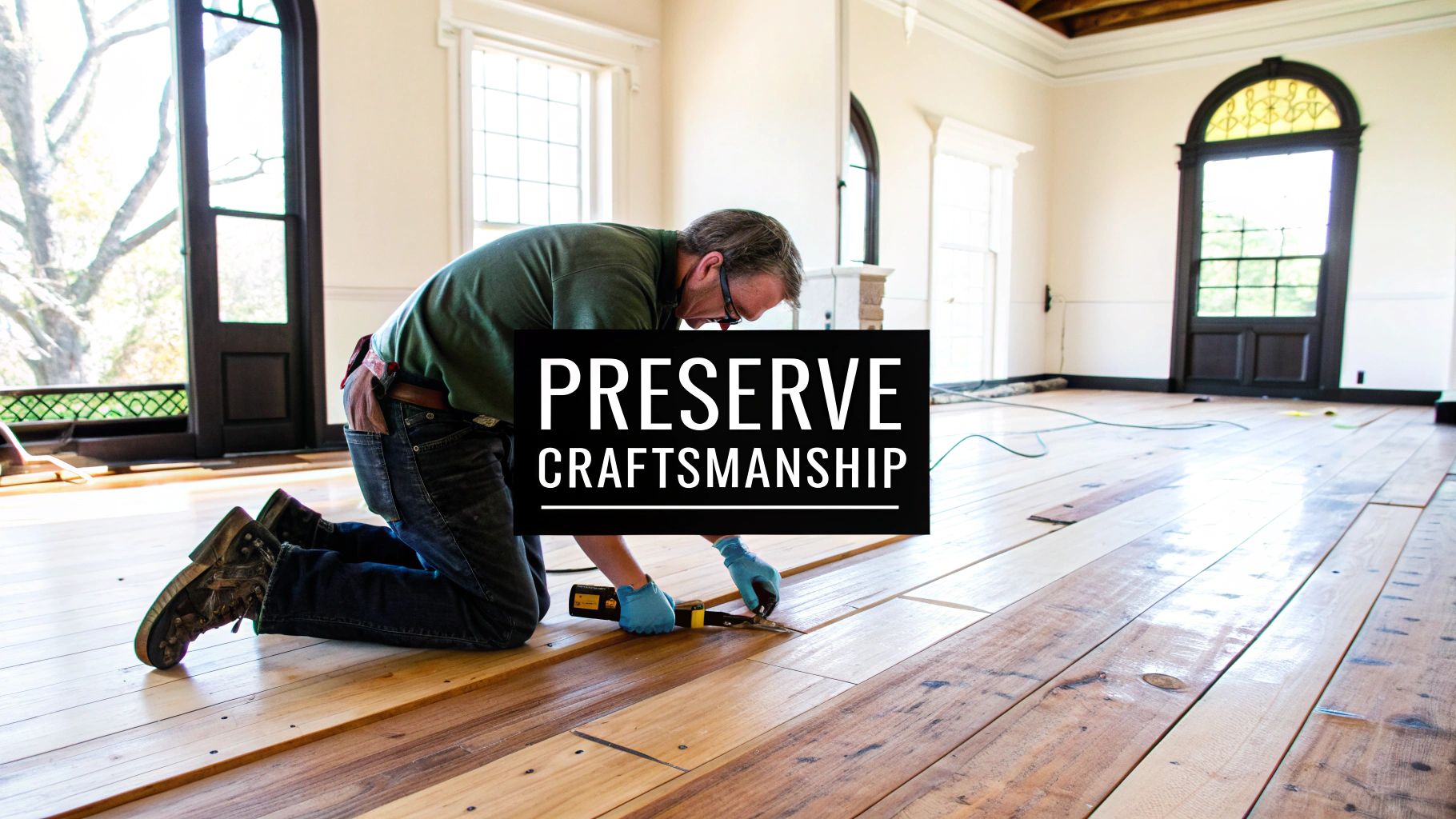
The Rhythm of a Historic Renovation
Good communication is the project's lifeblood. You'll want to insist on regular, scheduled site meetings—weekly is the gold standard. These meetings are your chance to walk the property, see the progress with your own eyes, and make informed decisions on the spot with your project manager.
A well-oiled renovation team also has a clear process for handling surprises. Because, trust me, there will be surprises. When they find rotted joists behind a wall, the protocol should be immediate: document it with photos, explain the options, and present you with clear costs for the fix.
The best moments are often the unexpected discoveries. Uncovering original clapboard under vinyl siding or finding an old fireplace isn't a setback. It’s a golden opportunity to bring back a piece of the home’s soul.
The Repair-Versus-Replace Philosophy
In the world of historic homes, the mantra is simple: repair, don't replace. This is about more than just saving old materials; it’s about honoring the story and skill embedded within them.
This mindset plays out in countless ways on a job site:
Original Windows: Instead of ripping out those beautiful, wavy glass windows, a specialist can painstakingly restore them. They’ll repair the sash, reglaze the panes, and even add modern weatherstripping to boost efficiency without sacrificing an ounce of character.
Heart Pine Floors: Those floors you think are beyond saving? An expert sees potential. They can salvage reclaimed wood to patch damaged boards, gently sand the surface to keep its patina, and apply a finish that makes its centuries-old grain pop.
Plasterwork: Cracks in old horsehair plaster aren't a dealbreaker. A true artisan can repair and skim-coat these walls, preserving the subtle, imperfect texture that modern drywall just can't replicate.
Yes, this approach takes more time and a higher level of skill. But the payoff is an authentic home that feels layered with history, not a modern house trying to look old.
The Power of True Artisans
Ultimately, the final quality of your project rests in the hands of the craftspeople doing the work. A great historic renovator has a curated network of masters—plasterers, woodworkers, and masons who have spent their careers perfecting techniques that are centuries old.
These are the people who can replicate a piece of damaged crown molding so perfectly you’d never spot the repair. They know how to mix historic mortar that lets old brick breathe. Their work is what elevates a project from a simple renovation to a breathtaking restoration that will stand for generations to come.
Maintaining Your Restored Home for Future Generations
Once the dust settles and your renovation is complete, it's easy to breathe a sigh of relief. But the journey of caring for a historic home is just beginning. Think of it less as a finished project and more as an ongoing conversation with the building itself.
True stewardship is about proactive, thoughtful care. This is especially true here in Charleston, where our humid climate is a constant threat to old-growth wood, traditional plaster, and historic masonry. A smart, preventative approach will not only protect your investment but also stop minor issues from snowballing into major, costly repairs. A simple routine ensures the beautiful work of your historic home renovators stands the test of time.
Creating a Seasonal Maintenance Checklist
The best way to stay ahead of problems is with a structured maintenance plan. You don't need anything complicated, just a simple checklist tailored to the rhythms of the Lowcountry seasons.
Spring (March – May):
Gutters and Downspouts: Once the oak tassels and pollen have fallen, get those gutters and downspouts cleared out. Clogged gutters are one of the biggest culprits behind water damage and foundation issues in old homes.
Windows and Doors: Give them a once-over. Do they open and close smoothly? Check the glazing putty on your historic windows for any cracks, and look for failed paint that could let moisture in. It's much easier to handle small repairs now before the summer humidity arrives.
Exterior Wood and Paint: Take a slow walk around your property. Pay close attention to the siding, trim, and piazza details. Any peeling paint or exposed wood is an invitation for trouble and needs to be addressed.
Fall (October – November):
Roof and Attic Check: After a long, hot summer and potential storms, it's smart to inspect the roof for any damaged shingles or flashing. While you're at it, a quick look around the attic with a flashlight can reveal the earliest signs of a leak you'd otherwise miss.
Masonry and Foundation Review: Look closely at your brickwork and tabby. Are there any new cracks in the mortar joints? Is anything crumbling? Catching these small spots and having them repointed now prevents water from seeping in during the winter rains.
One of the most valuable things you can do has nothing to do with a hammer or paintbrush. Keep a simple log of every repair and project—note the materials used, the artisans who did the work, and even the paint color codes. This log becomes an invaluable resource for you and a priceless gift to the next owner.
Documenting Your Home’s Story
Beyond the physical nuts and bolts, you are the current caretaker of your home’s legacy. Compiling an archive is a powerful way to honor that role. This "owner's manual" will only become more precious over time.
Make a point to keep a file with all the important paperwork—permits, architectural drawings, and the contact information for the specialized craftspeople who know your home. This kind of documentation doesn't just make future work easier; it enriches the home's unique story, connecting its past to its future.
Common Questions About Historic Home Renovations
Embarking on a historic renovation journey always brings up a few big questions. Let's tackle some of the most common ones we hear from homeowners so you can go into your project with your eyes wide open.
How Long Will This Really Take?
This is probably the number one question on every homeowner's mind, and the honest answer is: it depends. A focused kitchen or bathroom update might be done in 3-6 months, but a full-blown, preservation-focused restoration of an entire home can easily stretch well beyond a year.
Here in Charleston, the review process alone can add significant time before a single hammer is swung. The Board of Architectural Review (BAR) can sometimes take 2-4 months just for approvals.
Several factors will shape your final timeline:
Project Scope: The sheer scale of the work, from demolition to the final coat of paint, is the biggest driver.
Structural Surprises: Uncovering rotten joists or a crumbling foundation can add weeks for engineering, repairs, and inspections.
Permitting & Reviews: As mentioned, navigating the city's preservation requirements is a marathon, not a sprint.
Contractor & Weather Delays: A good contractor is a busy contractor. Their schedule, along with unpredictable Lowcountry weather, can also impact the calendar.
Can I Get Modern Comforts Without Ruining the Historic Charm?
Absolutely. This is where the artistry of a true historic home renovator shines. It’s all about skillful, thoughtful integration, not just slapping new technology onto old walls.
For instance, instead of tearing out original plaster to run new electrical, a skilled team might snake wiring through attic spaces or discreetly behind new baseboards. You get modern power without sacrificing the home's soul.
Upgrading to a chef's kitchen? That means commissioning custom cabinetry that flawlessly matches the home's original millwork profiles. Need high-efficiency HVAC? The units can often be installed on attic floors or cleverly hidden behind restored wood paneling, feeding air through small, unobtrusive vents.
Here are a few other clever ways to blend old and new:
Hiding smart home hubs and wiring behind baseboards for a clean look.
Using low-profile LED lighting designed to mimic the warm glow of traditional fixtures.
Installing in-floor radiant heating underneath the original, carefully preserved hardwood floors.
What About Unexpected Costs?
Even with the most detailed inspection, old houses hold secrets. It’s almost a guarantee that you’ll uncover something unexpected once the walls are opened up. We've seen it all—from termite damage hidden behind pristine-looking clapboard to ancient knob-and-tube wiring that requires a complete and immediate overhaul.
This is precisely why a contingency fund isn't just a good idea; it's essential.
We strongly advise clients to set aside a contingency fund of 15-20% of the total project cost. This isn’t for design upgrades; it's a safety net for the unknowns.
An experienced, transparent contractor will be upfront about potential risks they see in your specific property. This kind of honesty is what separates a smooth project from a budget disaster. As one of our Charleston clients recently said, "That contingency fund saved our project when we discovered extensive rot under the front porch."
Planning for both the knowns and the unknowns is the key to keeping your renovation on track. Keep the lines of communication with your contractor wide open, and be prepared to be flexible. With the right team and a solid plan, those inevitable surprises become manageable challenges, not project-ending catastrophes.
Ready to start the conversation about your own historic home? Contact Citadel Enterprises today.