The Problem With Impersonal Remodeling Contractors
When you’re planning a major home renovation or historic restoration in the Charleston area, the contractor you choose shapes everything: the final quality, your peace of mind during construction, and how well your investment holds up over time. We’ve spent more than three decades working with discerning homeowners who understand that remodeling isn’t just about new cabinets or fresh tile. It’s about transforming a home while protecting its character, respecting your vision, and delivering results that last.
This article explains what separates family-owned, locally rooted remodeling firms from the transient chains and impersonal contractors that dominate the industry. You’ll learn how ownership accountability, deliberate planning processes, and deep community ties create measurable differences in your project’s outcome.
Large, franchise-based remodeling companies operate on volume and velocity. They’re designed to process as many jobs as possible, optimize labor costs, and move crews quickly to the next site. This structure creates predictable friction points for homeowners.
When a crew rotates through your home every few weeks, no single person feels responsible for how everything fits together. A lead carpenter doesn’t answer to the designer who created the plans. The designer answers to a project manager in another state who’s juggling forty active jobs. Communication delays compound. Change orders pile up. Your questions take days to answer because they have to travel through layers of corporate infrastructure.
Beyond communication, these operations often sacrifice material quality and craftsmanship to maintain margins. Subcontractors are bid at the lowest price, not selected for reliability and skill. A plumber who did beautiful work on one project might be replaced by whoever’s available next time because the relationship is transactional, not built on trust.
The worst part is invisibility. If something goes wrong six months after completion, the company that sold you the job is already gone. Their regional office won’t return calls. Warranty claims disappear into bureaucratic fog. You’re left holding the problem.
Your action step: When evaluating any contractor, ask who will be present for final walkthrough and available for follow-up questions. If the answer is vague, that’s a warning signal.
How We Build Lasting Relationships Through Ownership
Ownership changes everything. When we own Citadel Enterprises, when our family’s reputation is directly tied to your satisfaction, and when you might see us at the grocery store or in our community, incentives align differently.
We can’t hide behind corporate policies. We can’t delegate accountability down to a subcontractor and claim it’s not our problem. Your home is our work, and your experience reflects directly on us. This isn’t theoretical. It shapes actual decisions we make every day.
During project planning, we slow down to understand what matters to you, not just what’s on the spec sheet. We explain options in plain language because your confusion creates problems later. When a homeowner understands why we’re recommending oak cabinetry over a cheaper alternative (durability, resale value, appearance under Charleston humidity), they make better decisions.
On the job site, the same faces show up week after week. You develop a real relationship with your lead carpenter and designer. They learn your preferences, notice details you care about, and feel personal pride in the finished work. That kitchen renovation isn’t just another job. It’s going into a neighbor’s home.
After completion, we stay available. That small cosmetic issue you notice six months in? It gets fixed because we know you, we stand behind our work, and a quick callback maintains a relationship that matters to us personally.
Your action step: Ask any contractor whether they’ll personally oversee your project or if it will be managed by someone you haven’t met. Ask for homeowner references and actually call them to ask about the owner’s involvement.
Our Three-Step Project Planning Process That Protects Your Investment
Remodeling projects fail in the planning phase long before construction starts. We’ve learned this through three decades of experience, and it’s why we’ve formalized a deliberate three-step process that protects your investment and prevents costly surprises.
Step One: Discovery and Vision Alignment
We spend time understanding what you actually need, not what you think you should want. A homeowner might say they need a bigger kitchen, but what they really need is a space where the whole family can cook together without bumping elbows. That distinction changes everything about layout and design.
During this phase, we tour your home, ask detailed questions about how you live in the space, discuss your aesthetic preferences, and talk honestly about budget realities. We collect inspiration images, take measurements, and identify any existing structural or mechanical issues that affect the scope.
Step Two: Detailed Design and Honest Estimation
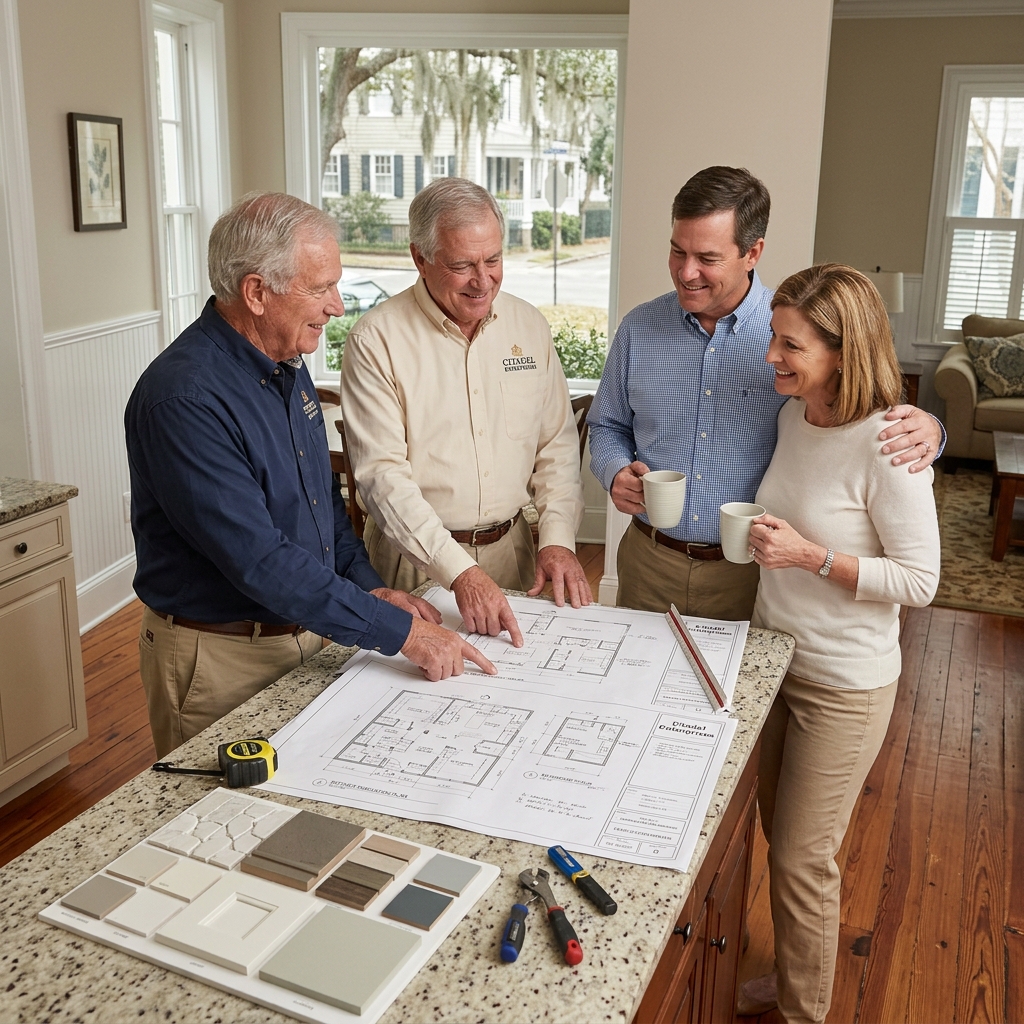
Once we understand your vision, we create detailed plans that show exactly what we’re building, how it connects to existing structures, and what materials we’re using. These aren’t vague renderings. They’re construction documents that our team will follow exactly.
Simultaneously, we provide transparent cost estimates that break down labor, materials, and timeline. You’ll see the price difference between mid-range and premium fixtures. You’ll understand why a bathroom renovation costs more in a 1920s historic home than in a newer house. You’ll know what’s included and what’s optional.
Step Three: Construction and Ongoing Communication
We establish a clear schedule, assign a dedicated point of contact, and set expectations for how and when you’ll receive updates. Weekly site meetings keep everyone aligned. Change orders are presented before they’re implemented, not billed as surprises at the end.
This structure eliminates the confusion that derails projects and damages relationships. You’re never wondering what’s happening or when something will be done.
Your action step: Request a detailed scope of work and timeline before hiring any contractor. If they can’t provide specifics, they haven’t done their planning work.
Kitchen and Bathroom Renovations That Reflect Your Vision
Kitchens and bathrooms drive home value, daily functionality, and personal satisfaction. They’re also where design choices intersect with plumbing, electrical, and structural realities. This is where our design-build expertise delivers real value.
Rather than hiring a designer, hoping their vision aligns with constructability, and then hiring a contractor to build what may not be realistic, we integrate both perspectives from the start. Our designers understand building codes, material availability, and what actually works in practice. Our builders understand your vision before construction begins.
For kitchen renovations, this means discussing workflow and light quality alongside cabinetry styles. We think about how you’ll actually use the space: where you prep vegetables, where you want pendant lighting for the island, how the coffee station relates to the pantry. A beautiful kitchen that doesn’t function for your lifestyle is a wasted renovation.
Historic Charleston homes present particular opportunities. Original kitchens were often small, cramped, and isolated. You might want to open the space by removing a wall, but that wall might be load-bearing or have century-old plumbing running through it. By involving both design and construction expertise early, we find solutions that preserve what’s beautiful and important about your home while creating the modern functionality you need.
Bathrooms follow the same logic. A guest bath doesn’t need the same investment as your primary bath, but every bathroom in your home deserves proper ventilation, water-resistant materials, and a layout that makes morning routines smoother. We help you allocate your budget accordingly.
Your action step: Before meeting with a contractor, take photos and measurements of your kitchen or bathroom, note what frustrates you about the current space, and collect three to five design images you love. This clarity accelerates planning and produces better results.
Preserving Charleston’s Historic Homes With Expert Craftsmanship
Charleston’s historic neighborhoods contain some of America’s most beautiful residential architecture. These homes also present renovation challenges that generic contractors simply aren’t equipped to handle.
A 1940s brick home with plaster walls, original hardwood floors, and period-appropriate detailing requires different approaches than new construction. Modern building materials don’t always match the properties of vintage materials. Code compliance sometimes conflicts with historic integrity. Removing a wall might reveal unexpected foundation issues unique to older construction methods.
We’ve specialized in Charleston historic home restoration because we respect what makes these properties valuable and understand the technical knowledge required to maintain that value. We know how to work with plaster, match original wood detailing, source period-appropriate fixtures, and navigate the renovation process without destroying the character that drew you to the home.
When we renovate a historic kitchen, we’re not just installing new appliances. We’re thinking about sightlines from the dining room, preserving original trim and doorways where possible, and choosing materials that complement rather than fight the home’s architectural period. A poorly executed historic renovation can actually decrease your home’s value and appeal. One done thoughtfully increases both.
This expertise extends to compliance. Historic homes sometimes need updates to plumbing, electrical, and HVAC systems. We know how to accomplish these upgrades while respecting historic district guidelines and maintaining the home’s authentic character.
Your action step: If your Charleston home is in a historic district, ask any contractor about their experience with historic preservation and whether they’ve worked with your local historic review board.
Why 30 Years of Local Experience Matters to Your Project
Three decades in Mount Pleasant and Charleston means we’ve renovated homes in every neighborhood, worked through multiple economic cycles, and learned what actually works in our specific climate and building environment.
We know the soil conditions that affect foundations. We understand how coastal humidity impacts material choices and ventilation strategies. We’ve built relationships with reliable subcontractors, material suppliers, and inspectors. We understand local building codes and have established working relationships with the permit office.
This isn’t theoretical advantage. It translates to practical benefits for your project.
When we specify materials, we choose based on performance in our climate, not on what’s trendy nationally. We know that certain paint finishes fail in our humidity. We understand which insulation strategies work best for our summers and winters. We’ve learned which contractors deliver consistently and which ones create headaches.
We’ve also learned from thousands of completed projects what design choices age well in Charleston, what upgrades add real resale value, and what looks impressive but disappoints homeowners over time. This experience saves you money by guiding you toward choices that deliver lasting value.
Our relationships within the community also benefit you. We work with inspectors who know our standards are high, so inspections move smoothly. We have suppliers who prioritize our jobs because we’ve been reliable customers for decades. We can often accelerate timelines or source difficult materials because of established relationships.
Your action step: Ask a local contractor how long they’ve been in business and whether they’re currently working on projects in your neighborhood. Drive by one or two active sites to see their work firsthand.
The Design-Build Advantage: Seamless Planning to Completion
Most homeowners encounter remodeling through separate vendors: an architect or designer, then a general contractor, then various specialists. This fragmentation creates communication gaps, cost overruns, and compromises.
Design-build is different. We provide both design and construction under one team, one contract, and one point of accountability. This integration delivers measurable advantages.
Imagine you want to open a kitchen to the living room. A traditional designer might create a beautiful open-concept plan without fully considering the structural beam required to support the removed wall. The contractor then quotes the beam cost as an unexpected addition. The homeowner is frustrated and over budget.
In our design-build process, structural engineering happens during design, not after. We know the beam requirement before pricing. We’ve already discussed how to handle it as part of the overall design. There are no surprises because design and construction planning happen together.
This integration also means faster overall timelines. Our design team communicates directly with our construction team. Materials are ordered while final details are still being refined, rather than waiting for complete design, then waiting for contractor ordering, then waiting for delivery. Subcontractors are selected early, so they can provide input on scheduling and material phasing.
Cost predictability improves dramatically. Because we control both design and construction, we can guide you toward solutions that deliver your vision within your budget, rather than presenting an expensive design and then asking you to cut corners.
Your action step: When requesting quotes, ask whether the contractor offers design-build services or relies on separate designers. Design-build typically provides better value and fewer surprises.
Whole-House Additions and Structural Work Done Right
Adding to your home is one of the most complex projects a remodeler tackles. It requires structural design, new foundation or floor systems, roofing integration, mechanical extensions, and seamless connection to existing architecture.
We’ve completed numerous whole-house additions throughout the Charleston area, from modest single-story expansions to substantial second-floor additions. Each project required careful planning to ensure the addition appears intentional rather than tacked on, performs properly mechanically, and adds genuine value to the home.
The structural work is critical. We work with structural engineers to design systems that match your home’s existing capabilities and local building code requirements. For additions in historic homes, this becomes particularly nuanced. A new second story needs to distribute loads safely while maintaining the visual character of the original structure.
Roofing integration is another detail that separates excellent additions from poor ones. A poorly designed roof transition creates water problems. The right approach uses proper flashing, drainage, and material transitions that are both functional and visually coherent.
Mechanical integration matters equally. New spaces need proper heating, cooling, and ventilation. In Charleston’s climate, humidity control is essential. We design additions with the same mechanical rigor we apply to the original home, ensuring comfort and preventing mold or moisture issues common in poorly designed additions.
Most importantly, we think about flow and livability. An addition should feel like a natural extension of your home, not a separate structure that’s awkwardly connected. This happens through intentional design of doorways, sightlines, material transitions, and furniture layout.
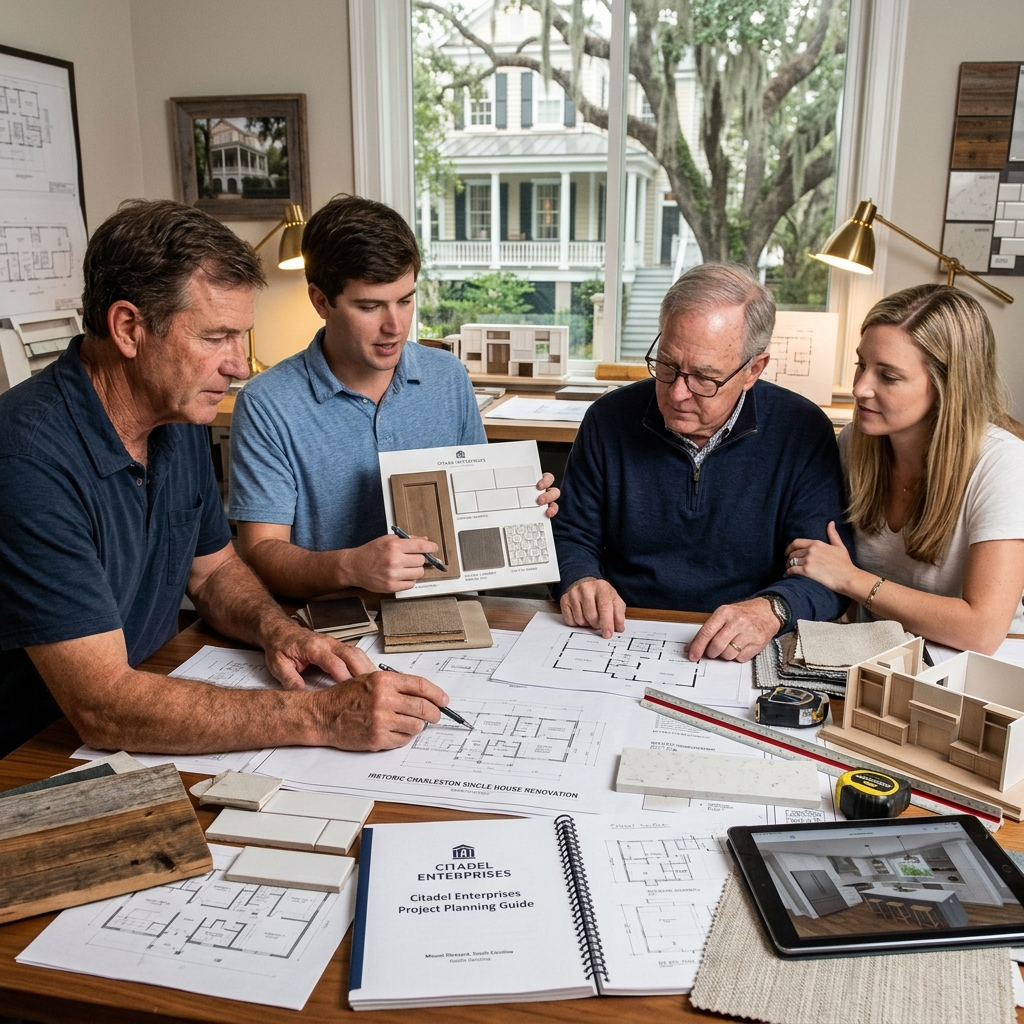
Your action step: If considering an addition, ask the contractor for photos of previous additions they’ve completed. Look for visual integration, not just structural soundness.
Ongoing Maintenance That Keeps Your Home Protected
Remodeling ends when we hand you the keys, but home care continues indefinitely. We offer ongoing maintenance plans that help you protect your investment and address small issues before they become expensive problems.
During your renovation, we learn your home’s specific systems, upgrades, and particular characteristics. Your HVAC might need filter changes on a specific schedule. Your new appliances might have particular maintenance requirements. You might have specific areas prone to moisture issues given your home’s age and location.
Our maintenance service builds on this knowledge. We perform seasonal inspections, identify potential issues early, and handle routine maintenance that keeps systems running efficiently. This prevents the common scenario where a homeowner neglects a small problem, it grows into a major failure, and suddenly they need a costly emergency repair.
We also provide expert advice about upgrades and timing. Maybe your roof is solid for another five years, but that timeline might shift if a hurricane hits. Your HVAC might be due for replacement soon, and it’s smart to plan for that before it fails during peak season. These insights help you budget and prioritize.
Your action step: Ask any contractor whether they offer post-completion maintenance or have recommendations for ongoing home care in our climate.
How Our Family Values Guide Every Decision
Our company exists because our family decided that remodeling should be done right, with integrity, and with genuine care for the homeowners we serve. That foundational commitment shapes every decision we make.
We could cut corners to improve margins. We could use cheaper materials, hire less experienced crews, or oversell scope to inflate pricing. Those choices would make quick profits. But they’d also betray the families who trust us with their homes and their money.
Instead, we’ve built our business on transparency, quality, and long-term relationships. We price honestly. We use materials we’d use in our own homes. We hire and retain the best craftspeople. We slow down to do things right rather than rush to do them fast.
This approach means we’re smaller than we could be, we say no to projects that don’t fit our standards, and we invest continuously in our people and processes. It also means we sleep well at night, our homeowners recommend us enthusiastically, and we’re still here after three decades doing what we love.
Our family values also show up in how we treat our employees and subcontractors. We pay fairly, we treat people respectfully, and we maintain relationships built on trust rather than squeezing every penny. This consistency means the same skilled people want to work with us repeatedly, so your home gets the best craftsmanship available.
Your action step: Ask any contractor about their turnover rate and how long their key team members have been with the company. High turnover signals deeper problems.
Starting Your Remodeling Journey With Citadel Enterprises Today
If you’re ready to begin a kitchen or bathroom renovation, explore a historic home restoration, plan an addition, or need other remodeling services in the Charleston and Mount Pleasant area, we’re ready to help.
Our process starts simply. You contact us with your project idea, timeline, and budget parameters. We schedule a site visit where we’ll walk through your home, listen to your vision, explain our process, and answer your questions. There’s no obligation and no high-pressure sales pitch. We’re genuinely trying to understand whether we’re a good fit for your project.
If we both feel good about moving forward, we’ll schedule a discovery meeting where we dive deeper into planning. This is where we assess what’s possible, identify structural or mechanical challenges, and start envisioning the finished project.
From there, we follow our three-step process: detailed vision alignment, comprehensive design and estimation, and then construction with clear communication throughout.
We’re not the cheapest option in Charleston. We’re the option that delivers quality, protects your investment, and remains accessible and responsive throughout your project. We’re the family-owned firm that will still be here to support you years after your renovation is complete.
Ready to transform your home? Visit our website at Citadel Enterprises to learn more about our full range of services, see photos of completed projects, and request a consultation.
Your Charleston home deserves work that’s done right. We’d be honored to help you achieve that result.