
You've probably heard the term mother-in-law suite, but what does it really mean? It’s more than just a spare bedroom. Think of it as a small, self-sufficient home right on your property, complete with its own entrance, kitchen, bathroom, and living area. It's the perfect setup for aging parents who want their independence but need to be close, or for adult children saving up for their own place.
Why Multigenerational Living is Booming in Charleston
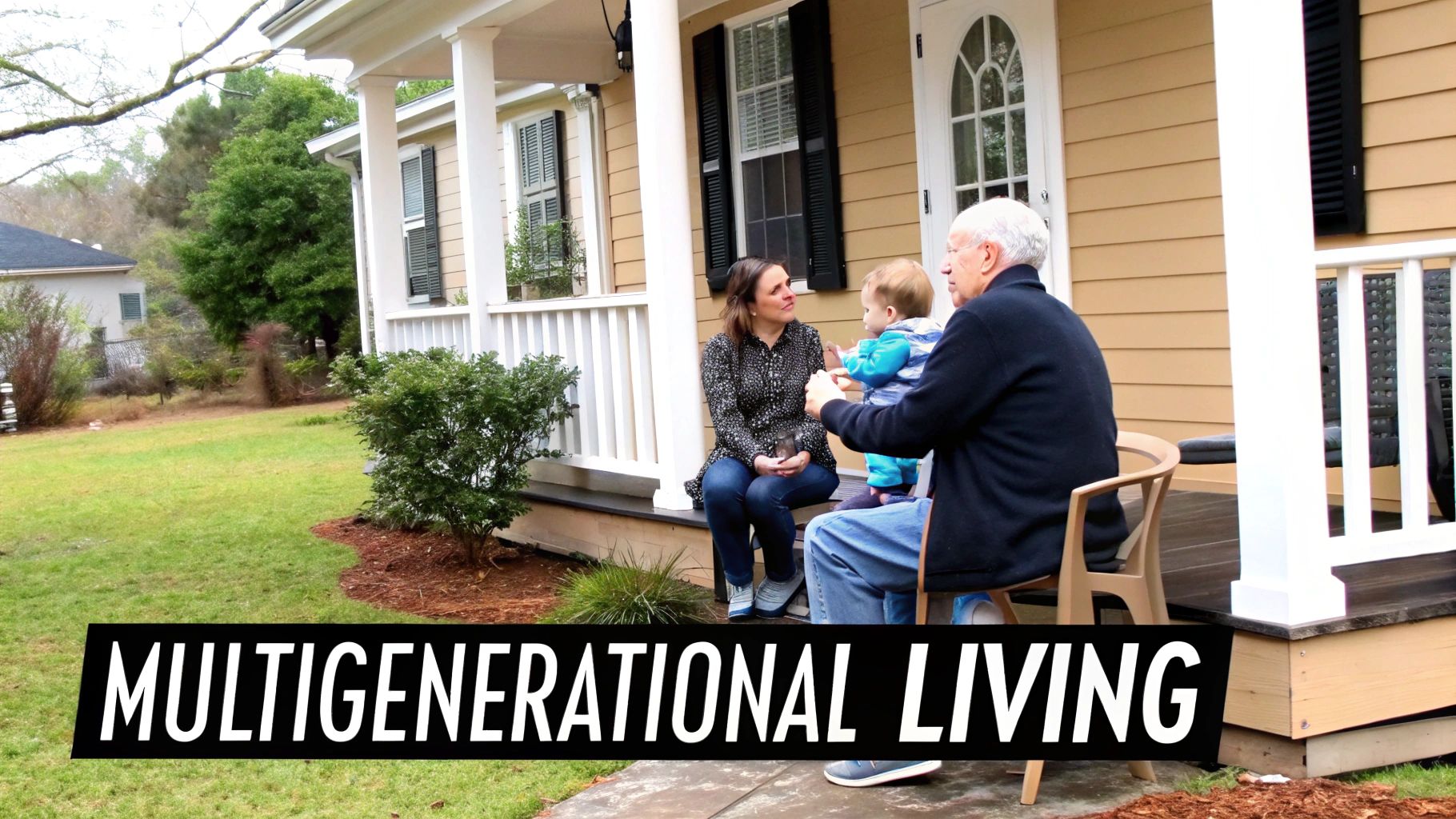
Having multiple generations under one roof (or at least on the same property) isn't a new concept, but it's making a huge comeback here in Charleston. It’s a smart, heartfelt response to the realities of modern life—a way to blend financial practicality with a deep desire to keep family close.
This isn't just a local feeling; the numbers tell the same story nationwide. A recent report from the National Association of Realtors showed that a record-breaking 17% of homebuyers specifically sought out multigenerational homes. The reasons are crystal clear: 36% were looking for cost savings, 25% wanted to care for aging relatives, and 21% needed space for adult children.
The Lowcountry Appeal of a Private Suite
In a place like Charleston, where family and community are everything, the mother-in-law suite just makes sense. It’s a way to provide dignified, independent living for parents while ensuring they have the support they need right next door. At the same time, it can be a financial launchpad for young adults trying to get a foothold in a tough housing market.
This guide is your roadmap to adding a mother-in-law suite to your Charleston-area home. We'll cover everything you need to know, from the initial idea to the finished space.
- What It Is: We’ll break down the different types, from detached cottages to garage apartments.
- The Pros and Cons: A balanced look at what to expect from this kind of project.
- The Bottom Line: A realistic breakdown of costs and budgeting for the Lowcountry market.
- Local Rules & Regs: Navigating the specific zoning and permitting hurdles in Charleston and Mount Pleasant.
- Lowcountry Design: How to create a suite that complements our unique coastal and historic architecture.
A well-planned suite is so much more than an extra building. It's a flexible asset that adds significant value to your property and adapts as your family’s needs evolve over time. It's about creating a home that truly works for everyone in it, for years to come.
What Exactly Is a Mother in Law Suite?
You've probably heard the term mother-in-law suite before, but what does it actually mean? It’s not just a spare bedroom. Think of it as a small, self-sufficient home that happens to be on your property, giving someone their own space while keeping them close.
In the world of permits and zoning, these are often called Accessory Dwelling Units (ADUs). But whatever you call it, the goal is the same: to create a complete living space that offers both independence and connection.
So, what separates a fancy guest room from a true mother-in-law suite? A few key features are non-negotiable if you want a genuinely functional, private space.
- Its Own Front Door: A private entrance is the single most important feature. It allows whoever is living there to come and go as they please without walking through the main house.
- A Place to Cook: Whether it's a simple kitchenette with a microwave and mini-fridge or a full kitchen, the ability to prepare meals is essential for self-sufficiency.
- A Full Bathroom: No sharing necessary. A dedicated, full bathroom is a must-have for privacy and comfort.
- Living and Sleeping Space: This could be a studio-style open concept or have a separate bedroom, but it needs to be a designated area for daily living.
When you put these pieces together, you get a space that perfectly balances privacy with proximity. It’s the ideal setup for multi-generational families here in the Lowcountry.
So, What Are My Options?
Mother-in-law suites aren't a one-size-fits-all solution. They come in several different shapes and sizes, and the best fit for you will depend on your property, your budget, and how much separation you’re looking for.
Let's break down the most common configurations we see around Charleston.
A detached suite, often called a backyard cottage or DADU (Detached Accessory Dwelling Unit), offers the most privacy. It’s a completely separate structure, like a mini guest house in your backyard. This is a fantastic option for the larger historic lots downtown or in the Old Village, where you have the space to build.
On the other hand, a garage conversion is a smart way to repurpose space you already have. By transforming your existing garage, you can often save a bundle on big-ticket items like the foundation and framing. We see this all the time in suburban Mount Pleasant neighborhoods where the garage provides a perfect shell for a new living space.
A mother-in-law suite provides property owners with tremendous flexibility and convenience, allowing them to get the most out of their property for years to come. Over time, it can serve as a home for aging family members, a starter apartment for adult children, a home office, or a private retreat.
Attached Additions vs. Interior Conversions
If a detached structure isn't in the cards, you've still got great options. An attached suite is a brand-new addition built right onto your home. It shares a wall with the main house but has its own entrance, creating a nice blend of connection and privacy. This can be more budget-friendly than a detached build since you can often tie directly into your home's existing plumbing and electrical systems.
The most cost-effective route is often an interior conversion. This involves carving out a new living space from within your home's existing footprint—think a walk-out basement, a large FROG (Finished Room Over Garage), or a section of the first floor. The key challenge here is clever design to ensure it feels private, has good natural light, and includes that all-important separate entrance.
To make it easier to see how these stack up, here’s a quick comparison of the most common options we build for Charleston homeowners.
Comparing Common Mother in Law Suite Options
| Suite Type | Description | Pros | Cons |
|---|---|---|---|
| Detached Cottage (DADU) | A standalone, separate structure built in the backyard. | • Maximum privacy and independence. • Can be used as a rental. • Custom design from the ground up. |
• Most expensive option. • Requires significant yard space. • More complex permitting process. |
| Garage Conversion | Transforming an existing attached or detached garage into a living space. | • More affordable than new construction. • Uses an existing structure. • Faster build time. |
• Limited by the garage's footprint. • May require significant insulation/HVAC work. • You lose your garage space. |
| Attached Addition | A new suite built onto the side or back of the main house, sharing a wall. | • Easier to connect utilities. • Less expensive than a detached build. • Feels connected yet private. |
• Construction can be disruptive. • Design must match the main house. • Reduces yard space. |
| Interior Conversion | Repurposing existing space inside the home, like a basement or bonus room. | • Most budget-friendly option. • No new foundation or framing. • Minimal impact on property footprint. |
• Can be difficult to create a private entrance. • May feel less private. • Dependent on existing layout and windows. |
Choosing the right configuration is the first major decision you'll make, and it sets the stage for your entire project, from budgeting and design to the final build.
Estimating Mother-in-Law Suite Costs in Charleston
Let's talk numbers. Figuring out the financial side of your mother-in-law suite is, without a doubt, one of the first and most important steps. While there’s no one-size-fits-all price tag, we can get a pretty clear idea by looking at the national picture and then dialing in on the unique factors that drive costs right here in Charleston.
Nationally, you'll see an average cost of around $82,750, but that's a huge ballpark. The real range can be anywhere from $25,000 to well over $265,000. The biggest variable? The type of project. Converting an existing room is always going to be far less of an investment than building a new, detached cottage from the ground up.
Of course, Charleston isn't your average market. Our beautiful coastal setting and deep architectural roots bring their own set of rules to the game—and they absolutely affect the budget.
Key Factors Shaping Your Charleston Budget
The cost of building a mother-in-law suite here is about much more than just square footage. Local conditions, from the Lowcountry soil under your feet to historic preservation guidelines, play a huge part in the final number.
- Coastal Building Codes: Here in the Lowcountry, we have to build tough. Homes must be engineered to stand up to hurricane-force winds and potential flooding, which means using specialized materials like reinforced foundations and impact-rated windows. Those necessary upgrades add to the bottom line.
- Historic District Requirements: If your property falls within a historic district, your project will need the green light from the Board of Architectural Review (BAR). This often requires using specific, period-accurate materials and designs that can be more costly than modern, off-the-shelf options.
- Site Preparation: Lowcountry lots can present their own challenges. Preparing a site might involve tree removal, grading the land, or even bringing in fill dirt to meet flood elevation requirements—all essential work that needs to be factored into the budget.
A design-build approach gives you cost certainty right from the beginning. When one team handles both design and construction, your budget is set early and managed carefully, which helps you avoid the kind of costly surprises that can derail a project.
The three main types of ADUs each come with their own general cost structure, as you can see below.
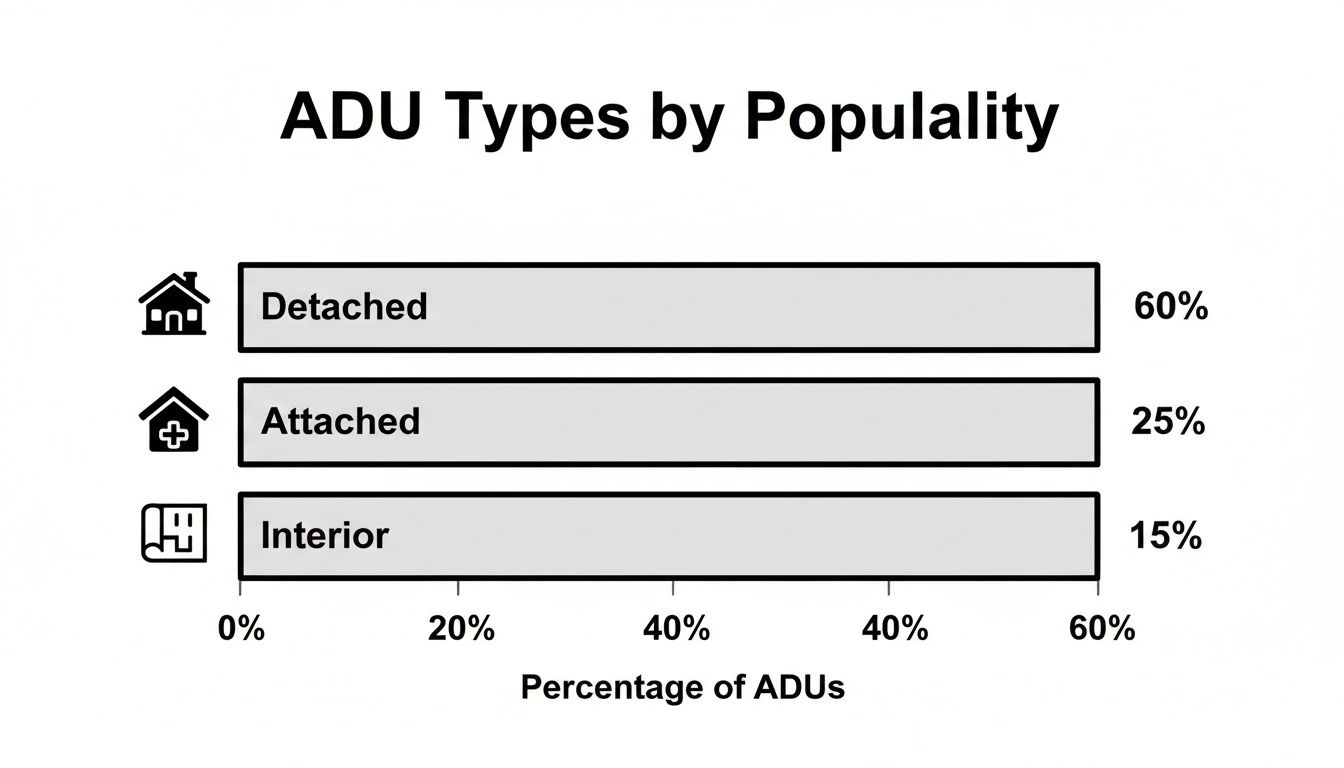
As the chart shows, a detached unit gives you the most privacy but is also typically the biggest investment. On the other end, an interior conversion is the most budget-friendly path.
Breaking Down the Investment
A solid budget isn't just one big number; it’s a detailed plan that accounts for every single phase of the project. Think of it as a series of smaller costs that all add up. For a good starting point on potential expenses, you can play around with a home addition cost estimator.
Here’s a look at the key financial pieces of the puzzle:
- Design and Architectural Fees: This covers the professional blueprints needed for permits and construction. Plan for this to be about 5-15% of your total project cost.
- Permitting and Impact Fees: These are the fees you'll pay to local governments like the City of Charleston or Mount Pleasant to review and approve your plans. The amount varies with the project's scope.
- Site Work and Utilities: This is all the prep work. It includes excavation, pouring the foundation, and running new water, sewer, and electrical lines to the new space.
- Construction Labor and Materials: The biggest slice of the pie. This covers the actual build—framing, roofing, plumbing, electrical, HVAC, insulation, and drywall.
- Exterior and Interior Finishes: These are the final touches that bring the space to life. Flooring, paint, cabinets, countertops, appliances, and light fixtures can all vary dramatically in cost depending on the quality and style you choose.
Putting together a detailed financial plan is the bedrock of a successful project. To dive deeper into this crucial step, take a look at our guide on how to budget for your home renovation. By understanding where your money is going, you can make smart decisions that align your vision with your budget, ensuring your new mother-in-law suite is a rewarding investment for years to come.
Boosting Property Value and Financial Returns
Building a mother-in-law suite is about more than just adding a spare room for family. It’s a savvy financial move that can pay you back for years to come. Think of it as a powerful asset that makes your property more useful today and far more attractive on the market tomorrow.
When you look at it as an investment, the returns show up in some pretty amazing ways. From a straightforward boost in your home's resale price to creating a brand-new income stream, a well-designed suite can completely reshape your property's financial picture. It's a real investment in flexibility, equity, and your family's future security.
A Direct Boost to Your Property Value
One of the most compelling reasons to add a mother-in-law suite is the immediate and often significant jump in your property's resale value. In a hot real estate market like Charleston, a home with a separate, fully functional living unit really stands out from the crowd. It instantly appeals to a much wider net of buyers, from families with multigenerational needs to those looking for a home with built-in rental potential.
We’re not talking about a minor bump in value, either. Homes with a mother-in-law suite can sell for 30%-35% more than similar properties without one. In sought-after urban and coastal markets, that turns the unit into a serious value booster. You can dig into the data yourself and learn more about how ADUs impact property values.
That extra value comes from the incredible flexibility the suite offers—something modern buyers are actively looking for. It’s a feature that more than pays for itself when it’s time to sell.
Creating a New Stream of Rental Income
Beyond the upfront equity, a mother-in-law suite opens the door to steady rental income. With Charleston's strong housing demand and bustling tourism, a separate living space can be a real money-maker. This is especially true for detached units that give a long-term tenant total privacy.
The income you generate can help offset your mortgage, pay back the construction costs over time, or just give you a nice financial cushion. You're essentially turning a piece of your property into a revenue-producing asset, which completely changes your home's financial equation.
A mother-in-law suite is an incredibly adaptable financial tool. Today it might house a family member, saving you thousands on care costs. Tomorrow, it could be a rental property generating monthly income. Years from now, it will be a key selling point that maximizes your home’s value.
Long-Term Savings on Senior Living Costs
The financial upside isn't just about property value or rental checks. For families thinking about an aging-in-place solution for loved ones, a mother-in-law suite can be a game-changer, offering enormous long-term savings. The cost of assisted living or senior care facilities in the Charleston area is no small thing—it can easily run into thousands of dollars every single month.
By investing in a suite, you're creating a safe, comfortable, and independent home for your aging parents right on your own property. That one-time construction cost can be far less than what you’d spend on just a few years in a senior living facility. It's a more personal and financially sound way to handle long-term care, keeping your family close while preserving your savings.
Navigating Charleston Zoning Laws and Building Permits
So, you’re ready to build a mother-in-law suite. It’s an exciting prospect, but before you start picking out paint colors, we need to talk about the less glamorous side of things: the local bureaucracy. Think of zoning laws and building permits as the official rulebook for your project. Trust me, trying to ignore them is a recipe for disaster—we're talking costly fines, infuriating delays, or even having to tear down your beautiful new addition.
This process isn't just red tape for the sake of it. It’s in place to make sure every structure, from a historic home on the Battery to a new backyard cottage in Mount Pleasant, is safe, functional, and fits into the neighborhood. While it might feel like a maze of paperwork, getting a handle on the basics is the first step toward a smooth build.
Working with a local design-build expert is like having a seasoned guide on this journey. They know the ins and outs of the permitting office, speak the language, and can spot potential roadblocks a mile away. It turns what could be a headache into a clear, manageable process.
Understanding Key Zoning Concepts
Before you can even think about construction, you need to know what you’re allowed to build. Zoning ordinances are the local laws that control how land can be used. For any mother-in-law suite project around here, you'll hear these terms pop up again and again.
- Setbacks: This is simply the required distance between your new building and your property lines. You can’t just build right up to the fence; setbacks create essential space for privacy, safety, and access.
- Lot Coverage: The city limits how much of your property can be covered by buildings. This rule is crucial for preventing over-development, managing stormwater runoff, and keeping some green space in our communities.
- Historic District Reviews (BAR): If your home is in one of Charleston's historic districts, this is a big one. Any exterior changes have to get the green light from the Board of Architectural Review (BAR). Their goal is to preserve the city's unique charm, ensuring your new suite looks like it belongs.
These regulations will dictate the basic footprint and placement of your project. A good contractor will do a deep dive into your property’s zoning from the very beginning to make sure your dream is actually doable.
The Permitting Checklist for Your Suite
Once you've confirmed your project plays by the zoning rules, it's time to get your building permits. This means submitting a full set of architectural plans to the local building department. They’ll comb through them to ensure everything is up to code.
Think of it this way: Zoning tells you what and where you can build, while building codes tell you how to build it safely. Both are essential for a compliant and successful project.
Here’s a quick rundown of the critical checkpoints your plans will need to clear:
- Utility Connections: Your drawings must clearly show how the new suite will tie into existing water, sewer, and electrical lines. This often involves working with the local utility companies to confirm everything is properly sized and connected.
- Floodplain Regulations: We live in the Lowcountry, so flood zones are a fact of life. If your property is in a designated floodplain, your suite will have to meet strict requirements for elevation and use flood-resistant materials. It adds a layer of complexity, but it's non-negotiable.
- Accessibility Standards: While not always mandatory for a private home, thinking about accessibility from the start is just smart. Incorporating features like wider doorways, no-step showers, and reinforced walls for future grab bars makes the space usable for everyone, no matter their age or mobility.
Getting this part right is everything. For a more detailed look at the paperwork and procedures, you can learn more about the permitting process for home remodels. It’s a thorough process, but it’s what guarantees your new mother-in-law suite isn't just beautiful, but also safe, legal, and built to last.
Designing a Suite with Charleston Style
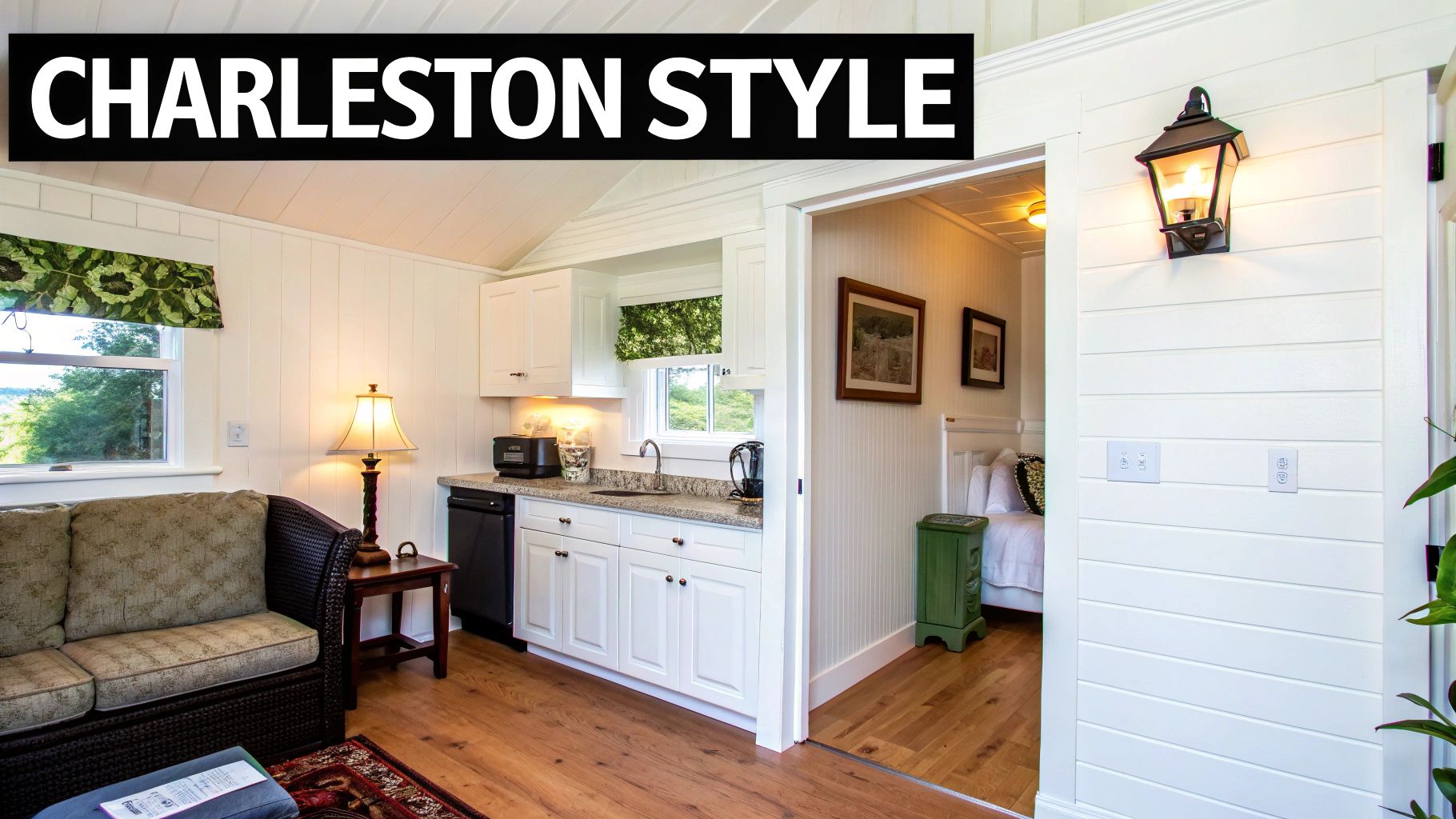
Once you’ve navigated the planning and permitting, the real fun begins: the design. Building a mother-in-law suite in the Lowcountry is about so much more than just adding another room. It’s an exercise in architectural harmony, crafting a space that feels like it’s been part of your property all along.
The last thing you want is an addition that looks tacked on. Think of it like adding a new verse to a classic song—it has to match the rhythm and tone of the original. Whether your home is a historic single house south of Broad or a breezy coastal build on Isle of Palms, the new suite should complement, not clash with, its style.
To nail the local aesthetic, it helps to have a real appreciation for the Architecture of Charleston SC. This context is what guides authentic design choices, from the pitch of the roof right down to the style of the porch railings.
Blending Beauty with Lowcountry Durability
Around here, we design for sun, salt, and suffocating humidity. Choosing the right materials is absolutely critical if you want your suite to look good for years to come, not just on day one. Durability and beauty have to walk hand-in-hand.
- Exterior Siding: You need materials that can stand up to moisture and salt spray. Fiber cement siding is a fantastic choice; it gives you the classic look of wood clapboard without the endless maintenance.
- Resilient Roofing: A standing-seam metal roof is practically a Lowcountry signature for a reason. It’s incredibly long-lasting and engineered to handle the high winds we see during storm season.
- Impact-Rated Windows: This is non-negotiable. Impact-rated windows are essential for hurricane preparedness, but they also do a great job of letting in that gorgeous coastal light.
Making smart material choices from the start means you’re building a low-maintenance retreat that will hold its value and charm for decades.
Think of your new suite's design as a conversation with your main house. The architectural details—like window trim, porch columns, and door styles—should echo the primary home, creating a unified and harmonious property.
Smart Design for Function and Comfort
A beautiful design is one thing, but a livable design is what truly matters. For a mother-in-law suite, that means making every square foot count while ensuring privacy and accessibility for anyone, at any stage of life.
Even with a modest footprint, a well-planned suite can feel surprisingly spacious and completely self-sufficient.
- Maximizing Layouts: Open-concept floor plans are your best friend here, making the kitchen and living areas feel airy and connected. We also love incorporating clever storage, from built-in shelving to furniture that does double duty.
- Creating Privacy: This is key for keeping everyone happy. You can create a real sense of separation with thoughtful placement of windows and entrances, or even by using landscaping as a natural screen. A small, private porch can make all the difference.
- Ensuring Accessibility: It’s always smart to plan for the future. We recommend building with wider doorways (at least 36 inches), a zero-entry shower, and reinforcing bathroom walls so grab bars can be easily installed down the road.
These are the details that elevate a simple structure into a comfortable, independent home. By balancing that iconic Charleston charm with practical, forward-thinking design, you create a mother-in-law suite that is both a beautiful and incredibly valuable addition to your property.
Common Questions About Building a Mother-in-Law Suite
As you start seriously thinking about adding a mother-in-law suite to your Charleston property, a lot of questions are bound to pop up. It’s a big project, after all—an investment in your family’s future and your home’s value—so you want to get it right. We've gathered some of the most common questions we hear from homeowners to give you some straightforward answers.
Think of this as a quick-hit FAQ to cover the practical concerns that surface after the initial excitement wears off. We'll touch on everything from timelines to taxes, helping you firm up your understanding and move forward with confidence.
How Long Does It Take to Build a Mother-in-Law Suite in Charleston?
Honestly, the timeline can vary quite a bit depending on what you’re building. A simple interior conversion, like turning a garage into a living space, might only take 2-4 months from start to finish. On the other hand, a brand-new, detached unit is a much bigger undertaking and you're likely looking at 8-12 months.
A huge chunk of that time isn't even construction. It’s the design and permitting phase, which can easily take a few months on its own—especially if you're in one of Charleston's historic districts. This is where working with a design-build firm really helps; they can manage all those moving parts at once and keep the schedule from getting out of hand.
The first step in any mother-in-law suite project is always a simple conversation. An initial consultation lets you share your vision, talk through what you need, and see what’s really possible with your property, all without any obligation.
Will a Mother-in-Law Suite Increase My Property Taxes?
Yes, it will. Any time you add finished, livable square footage to your property, its assessed value goes up, and your property taxes follow suit. The exact amount of the increase depends on how much value the new suite adds, which the local tax assessor will determine after the project is complete.
But while no one gets excited about a bigger tax bill, it’s important to see the whole picture. That extra cost needs to be weighed against the huge financial upsides: a major boost to your property's resale value, the potential for rental income, and the incredible long-term savings when you compare it to assisted living or other senior care options.
Can I Rent Out My Mother-in-Law Suite?
In most cases, the answer is yes. But—and this is a big but—the rules around rentals can be tricky and vary quite a bit between the City of Charleston, Mount Pleasant, and other local towns. Regulations for short-term rentals (think Airbnb) are often completely different from those for long-term leases.
It's absolutely critical to check the specific local ordinances and any HOA rules for your property before you get too far down the road. We make it a point to help our clients sort through these requirements early on, so we can be sure their plans for the space are both realistic and 100% legal.
Ready to explore the possibilities for your own home? The team at Citadel Enterprises has been helping Charleston and Mount Pleasant homeowners create beautiful, functional living spaces for decades. We can guide you through every step, from initial design to final construction. Contact us today for a consultation.